

Hydroponic weed is cannabis grown without soil, using water-based nutrient systems. It grows faster, yields more, and offers precise control. This is ideal for home and commercial growers seeking top-shelf buds with fewer pests, better consistency, and rapid harvest cycles.
Still curious about hydroponic weed? This guide will help.
As soil-based cultivation becomes outdated for serious growers, hydroponics is emerging as the go-to method for speed, yield, and control. But what is hydroponic cannabis really like to grow? Is it worth the switch?
Let’s find out.
What Is Hydroponic Weed?
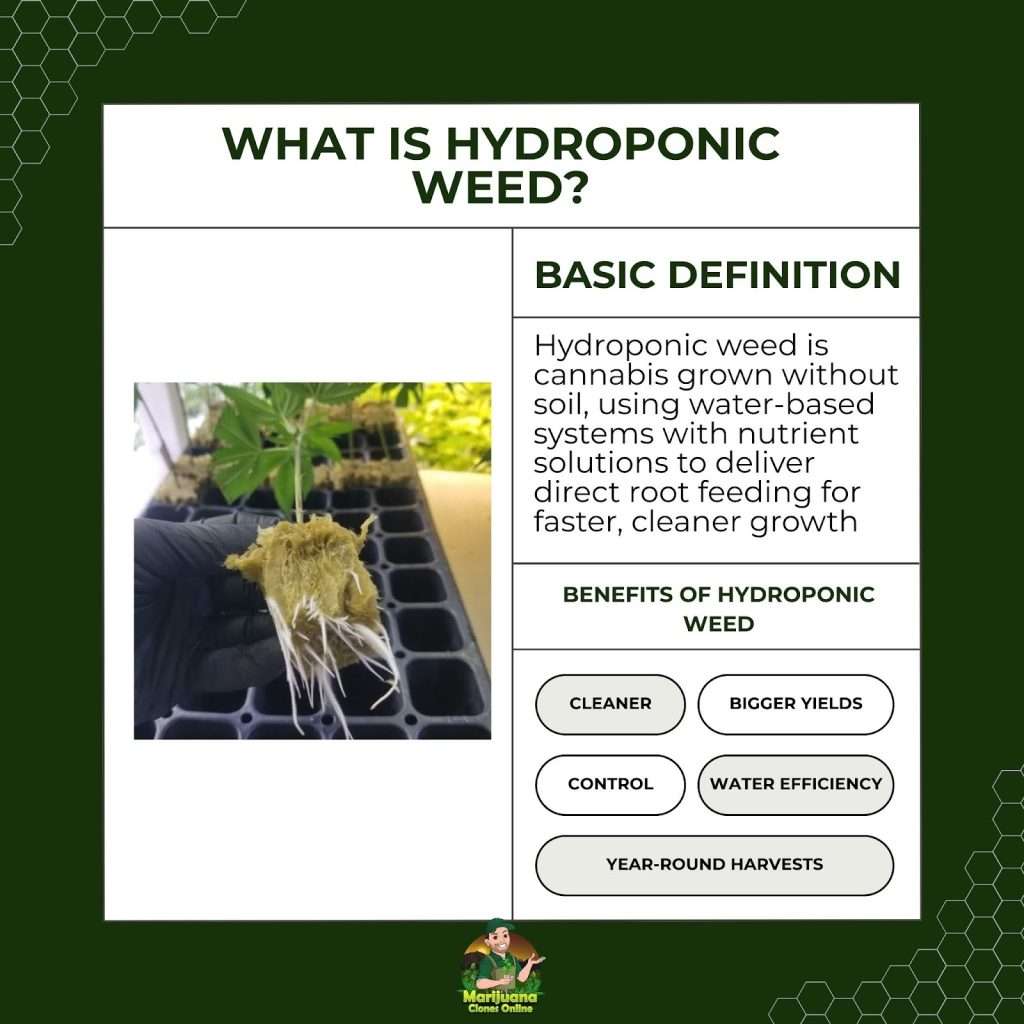
Hydroponic weed is cannabis grown without soil. Instead of relying on dirt to hold nutrients, you use a water-based system that delivers everything your plants need directly to their roots. This gives you full control over how your cannabis grows down to the nutrient levels, pH, and oxygen in the root zone.
Because your plants don’t need to search through soil, they grow faster and stronger. You can push through veg and flower stages more efficiently, cut down your grow time, and see higher yields with tighter, more resin-packed buds.
Hydro setups also help you avoid common problems like fungus gnats, rootbound issues, or inconsistent feeding. You create a cleaner, more controlled environment where pests and diseases have fewer ways in.

How Hydroponic Systems Work (and What You Need to Get Started)
Hydroponic systems grow cannabis by delivering oxygenated, nutrient-rich water directly to the roots. Removing soil from the equation allows your plants to absorb nutrients faster, which leads to stronger growth and better results. You take full control of the environment, deciding exactly how your plants eat, breathe, and develop.
To get started, you will need a few essential components that support the root zone, regulate feeding, and maintain balance in your grow space. Each part of the system plays a role in creating the conditions your plants need to thrive.
Common Types of Hydro Systems for Weed
There is no one-size-fits-all system in hydroponics. Each setup offers a different balance of control, complexity, and scalability. The right choice depends on your space, experience, and how hands-on you want to be during the grow cycle.
Here are the most common systems used by cannabis growers today:
Deep Water Culture (DWC)
Your plant roots sit in a reservoir of oxygenated, nutrient-rich water. An air pump keeps the water bubbling, supplying the roots with everything they need. This system is simple to set up and delivers fast growth when kept clean and properly oxygenated.
Nutrient Film Technique (NFT)
A thin stream of water flows over the roots through a slightly tilted channel. This technique is highly efficient but works best with smaller plants or lighter feeding strains. Constant circulation is key, so pump reliability matters.
Ebb and Flow (Flood and Drain)
Plants rest in trays filled with growing medium. These trays flood with nutrients on a timer and then drain back into a reservoir. This setup works well for multiple plants and offers flexibility in how often you feed.
Drip Irrigation
Nutrient solution is delivered slowly to each plant through tubing and emitters. This allows for targeted feeding and is easy to scale. Drip systems are popular in both home and commercial operations due to their consistency and low maintenance needs.
Aeroponics
Roots hang in the air while nutrient mist sprays them at timed intervals. This method delivers high oxygen levels and fast absorption, but it requires precise equipment and constant monitoring. It is best suited for experienced growers who want maximum control.
Required Equipment
A successful hydroponic grow relies on gear that supports plant health, controls the environment, and keeps nutrient delivery consistent. Every piece of equipment should work together to maintain balance and avoid stress on your plants.
Here is what you need to get started:
- Reservoir or nutrient tank: Holds your water and nutrient solution. Size depends on plant count and system type.
- Air pump and air stones: Keep oxygen flowing to the roots in systems like DWC. Essential for preventing root rot.
- Water pump: Moves nutrient solution through the system in setups like NFT, ebb and flow, or drip irrigation.
- Growing containers or trays: Supports the root system. Net pots, trays, or buckets, depending on the method you use.
- Growing medium: Inert materials like Rockwool, clay pebbles, or coco coir anchor the plant while allowing nutrient access.
- Grow lights: Full-spectrum LED or HID lights provide the energy your plants need. Placement and intensity affect growth speed and bud development.
- pH and EC meter: Measures water acidity and nutrient concentration. Keeping pH between 5.5 and 6.5 and monitoring EC ensures proper feeding.
- Thermometer and hygrometer: Tracks air temperature and humidity. Stable conditions reduce plant stress and boost yield.
- Timers and controllers: Automate light cycles, pumps, and fans for consistent performance without constant manual input.
- Ventilation system: Includes fans, carbon filters, and ducting. Keeps air moving and removes excess heat and odor.
- Trellis netting or plant supports: Helps train your plants and manage canopy height for even light exposure.
Hydroponic Nutrients
Nutrients are the fuel your plants use to grow, and in hydroponics, that fuel is delivered directly through water. Because there is no soil to buffer or store nutrients, the mix you use needs to be precise and well-balanced. Feeding in hydro is all about control, but that control comes with responsibility.
Macronutrients and Micronutrients
Cannabis needs three main macronutrients: nitrogen (N), phosphorus (P), and potassium (K). These support leafy growth, root development, and flower production. Alongside these, your plants also need secondary nutrients like calcium and magnesium, and micronutrients such as iron, boron, and zinc.
A complete nutrient solution will contain all of these elements in ratios that shift depending on the growth stage.
Nutrient Schedules
During veg, you will want higher nitrogen levels. During flower, phosphorus and potassium take the lead. Most nutrient brands offer feeding schedules that match the needs of cannabis through each stage. Following these guides while adjusting to your specific strain keeps your plants thriving.
pH and EC Management
Hydroponic cannabis absorbs nutrients best when the water pH stays between 5.5 and 6.5. Outside this range, nutrient lockout can happen, stopping your plants from feeding even if nutrients are present.
EC (electrical conductivity) measures how strong your nutrient mix is. Stay within the recommended EC range for each stage of growth, and keep an eye out for signs of overfeeding like leaf tip burn or clawing.
Benefits of Growing Hydroponic Weed
Hydroponic cultivation gives you the ability to guide your cannabis plants with precision. You are no longer guessing how your soil behaves or waiting for delayed responses. Every detail is in your hands, and that control leads to serious advantages in both quality and performance.
Faster Growth Cycles
Roots in hydro systems absorb nutrients and oxygen more efficiently than in soil. That means you get faster transitions through veg and flower. By shaving days or even weeks off your timeline, you can fit more harvests into the year without cutting corners.
Bigger Yields
Controlled feeding, stable environments, and constant access to oxygen help your plants develop bigger, denser buds. When everything is optimized, cannabis puts more energy into flower development instead of searching for resources.
Clean and Consistent Results
No soil means fewer variables. You eliminate many of the pests, pathogens, and inconsistencies that often come with traditional grows. This leads to cleaner buds, fewer surprises, and more predictable results every time.
Space Efficiency
Hydroponic systems make the most of limited square footage. Vertical racks, compact reservoirs, and tailored lighting setups help you grow more even in tight areas. Every inch of your space works harder.
Customizable Environments
You decide how much light, water, airflow, and nutrients your plants get. This lets you match your setup to the specific needs of each strain. That level of fine-tuning is what helps good growers become great.
Reduced Pest and Disease Pressure
Without soil, many of the common entry points for bugs and mold are gone. You work in a cleaner, more controlled environment where prevention is built in.
Water Efficiency
Hydroponic systems recycle and reuse water rather than letting it drain away. With proper management, you end up using less water overall while giving your plants more of what they need.
Easier to Automate
Hydro systems pair well with timers, sensors, and controllers. That means fewer manual tasks and more consistent care. As your grow scales up, automation becomes a major advantage.
Drawbacks & Growing Pains of Hydroponics
Hydroponics gives you control, but that control comes with responsibility. Before making the switch, it helps to know where growers often stumble and what challenges are common in early runs. These growing pains are real, but they can be managed with preparation and attention to detail.
- Higher Setup Costs. Starting a hydro grow requires investment in pumps, meters, lighting, and a controlled space. While these tools pay off over time, the upfront cost is a barrier for many first-time growers.
- Steeper Learning Curve. Soil can buffer mistakes. Hydro does not. If your pH or EC is off, your plants feel it fast. You will need to monitor daily, make precise adjustments, and learn how to read plant signals.
- Risk of Nutrient Lockout. Incorrect pH levels prevent nutrient uptake. If pH drifts outside the ideal range, your plants might show deficiencies even when nutrients are available. Consistent testing and adjustment are required to keep everything in balance.
- Overfeeding Hazards. It is easy to give your plants too much too soon in hydro. Burnt leaf tips, clawing, or stunted growth are signs that nutrient levels need dialing back. Start light and increase gradually.
- Root Rot Risk. Without proper oxygenation, roots can suffocate in stagnant water. High reservoir temperatures or overly wet media increase the chances of root rot. Keep water clean, cool, and bubbling.
- Mechanical Failures Can Be Costly. A failed pump or clogged line can stop water flow and damage plants quickly. Redundancy, regular checks, and maintenance routines help prevent total system failure.
- Algae and Bacteria Buildup. Light leaks or dirty reservoirs encourage algae and harmful bacteria. These can clog your system and compete with roots. A clean, shaded environment reduces the risk.
- Clone Shock During Transfer. Moving clones into a hydro setup requires careful acclimation. If roots are underdeveloped or plugs are too wet, plants may stall or decline. Strong, hydro-ready clones reduce the risk.
Clones vs Seeds: Why Hydro Loves Clones
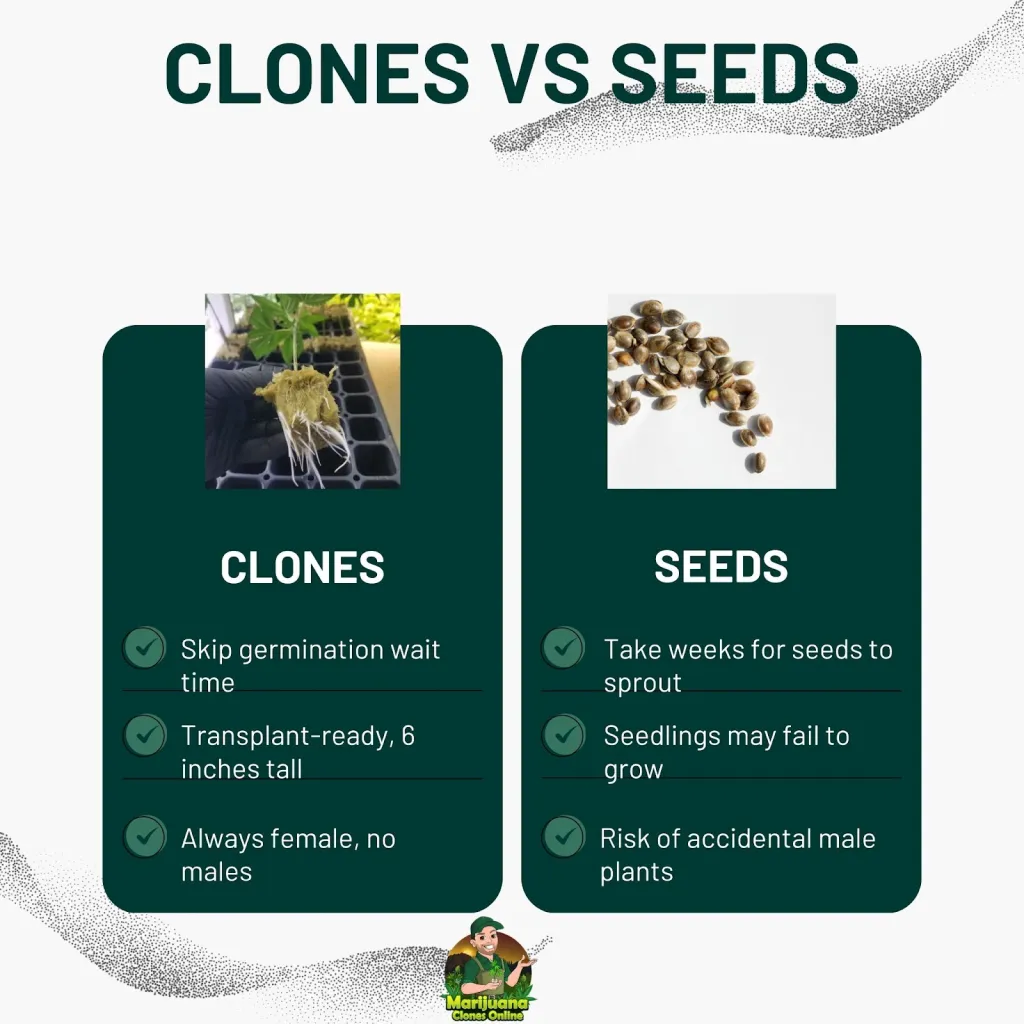
Hydroponic systems thrive on consistency, and clones deliver exactly that. Each clone is a genetic match of a proven plant, which means you can expect the same growth habits, structure, and yield potential every time.
Seeds, on the other hand, bring unpredictability. Even in the same pack, different phenotypes can appear, and that inconsistency makes fine-tuning your hydro setup harder than it needs to be.
Clones allow you to skip the early uncertainty of seed germination. You start with a plant that already knows how to grow. It is rooted, stable, and ready to take off. In hydro, where timing and uniformity matter, that head start makes a real difference.
Hydro-ready clones arrive in plugs or Rockwool, giving you a clean transition into any system without the delays and risks of seedling development. Many growers also prefer starting with larger teen plants since they adapt quickly and shave weeks off the veg cycle.
With seeds, you need to sex each plant, watch for herms, and hope the phenotype expresses what you are after. Clones remove the guesswork. Each plant in your system grows at the same pace, reaches the same size, and flowers with the same intensity.
Ready to Grow Faster, Stronger, and Cleaner?

Start your next run using elite clones or premium seeds from Marijuana Clones Online. Explore our exclusive genetics trusted by top cultivators and bring home the kind of results most growers only dream about. Your best harvest begins here.