
Decarboxylation happens when cannabis is gently heated to activate THC and CBD. The ideal method is baking ground flower at 220°F (104°C) for 30–45 minutes, which converts THCa into THC so your weed becomes psychoactive and ready for edibles or infusions.
But how do you know if you did it right, and what happens if you get it wrong?
Read on to find out.
What Is Decarboxylation?
Decarboxylation is the transformation that brings cannabis to life. Without it, your flower stays raw, and its cannabinoids remain inactive. THCa and CBDa are the acid forms found in fresh or dried cannabis. They don’t deliver the effects people associate with cannabis unless exposed to controlled heat. That’s where decarbing comes in.
By applying heat at the right temperature and duration, you remove a carboxyl group from these compounds. That’s when THCa becomes THC, and CBDa becomes CBD. Once this change takes place, the plant becomes ready for infusions, topicals, edibles, and any application where you’re not lighting it up.
Many growers assume the moment you light a joint or hit a vape, you’re activating THC. That’s true. But if you’re planning to cook, extract, or infuse, this transformation won’t happen automatically. You have to make it happen yourself.

Best Methods for Decarbing Weed
Every grower has a slightly different setup, but the goal remains the same: activate cannabinoids without damaging their potential. Decarbing isn’t about blasting heat into your flower. It’s about precision, consistency, and protecting everything you’ve worked hard to grow. The right method preserves terpenes, boosts potency, and sets you up for edibles, tinctures, or topicals that actually work.
Oven Method (Most Reliable for Home Growers)
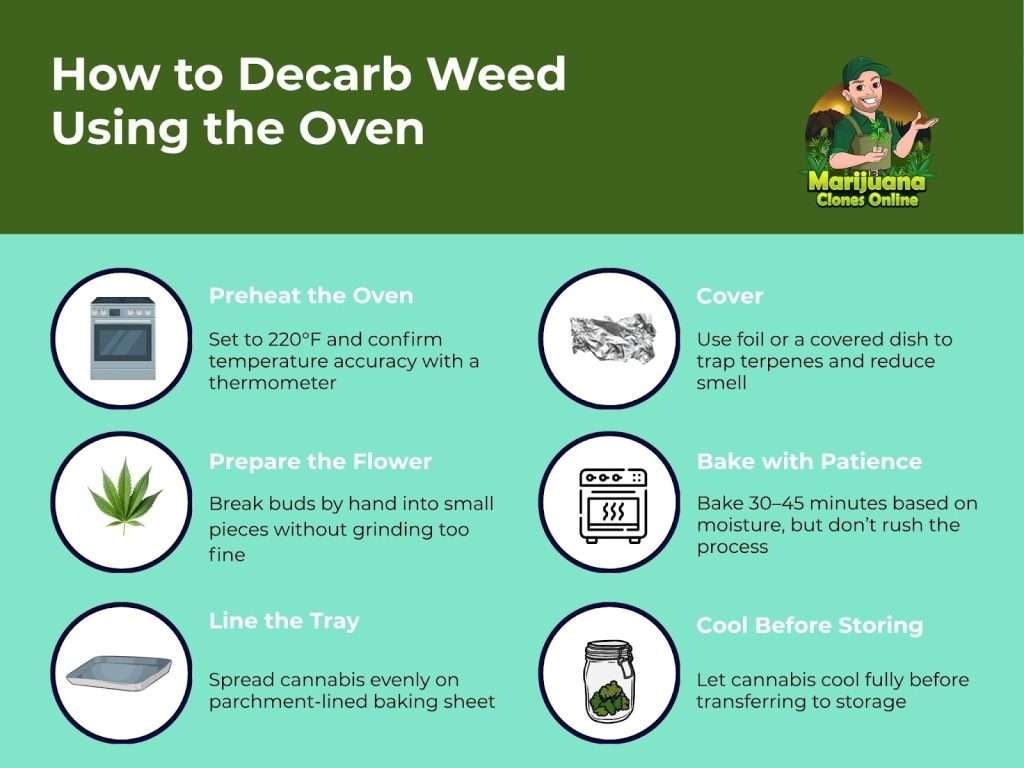
This is the method most growers trust for consistency. It’s simple, accessible, and gets the job done.
- Set your oven to 220°F. Use an oven thermometer to confirm accuracy. Many ovens run hotter or cooler than the dial says.
- Lightly break up your cannabis by hand. Avoid grinding it finely, which exposes too much surface area and can burn trichomes.
- Spread the flower in a thin, even layer on a baking sheet lined with parchment paper. Avoid stacking or overlapping.
- Cover the tray with foil or use a covered baking dish to trap terpenes and reduce smell.
- Bake for 30 to 45 minutes, depending on moisture level. High humidity flower may take longer.
- Let it cool completely before storing or using.
Growers who follow this method closely rarely run into issues. It gives you full control and requires no special tools.
Mason Jar Method (Best for Terpenes and Smell Control)
If you’re growing in a shared space or want to keep odor to a minimum, this method is a smart option.
- Place your broken-up cannabis inside a mason jar. Close the lid loosely to allow pressure release.
- Set the jar in an oven-safe dish in case of tipping.
- Bake at 220°F for 40 to 50 minutes. Rotate the jar halfway through to ensure even heating.
- Once removed, let it cool before opening. The trapped steam can carry terpenes back into the flower.
This method preserves more aroma and flavor while keeping your house from smelling like a hotbox.
Sous Vide Method (Most Precise for Flavor Purists)
Sous vide is perfect for growers who care about preserving delicate terpenes and want full control over temperature.
- Seal your flower in a vacuum bag or heavy-duty zipper bag.
- Submerge in water heated to 203°F using a sous vide machine.
- Let it cook for 90 to 120 minutes. This slow, steady approach reduces terpene loss and keeps the smell locked in the bag.
- Remove and let it dry before storage or use.
This method takes longer but produces the cleanest, most flavorful results. Many commercial producers rely on similar techniques.
How to Know If Your Weed Is Fully Decarbed
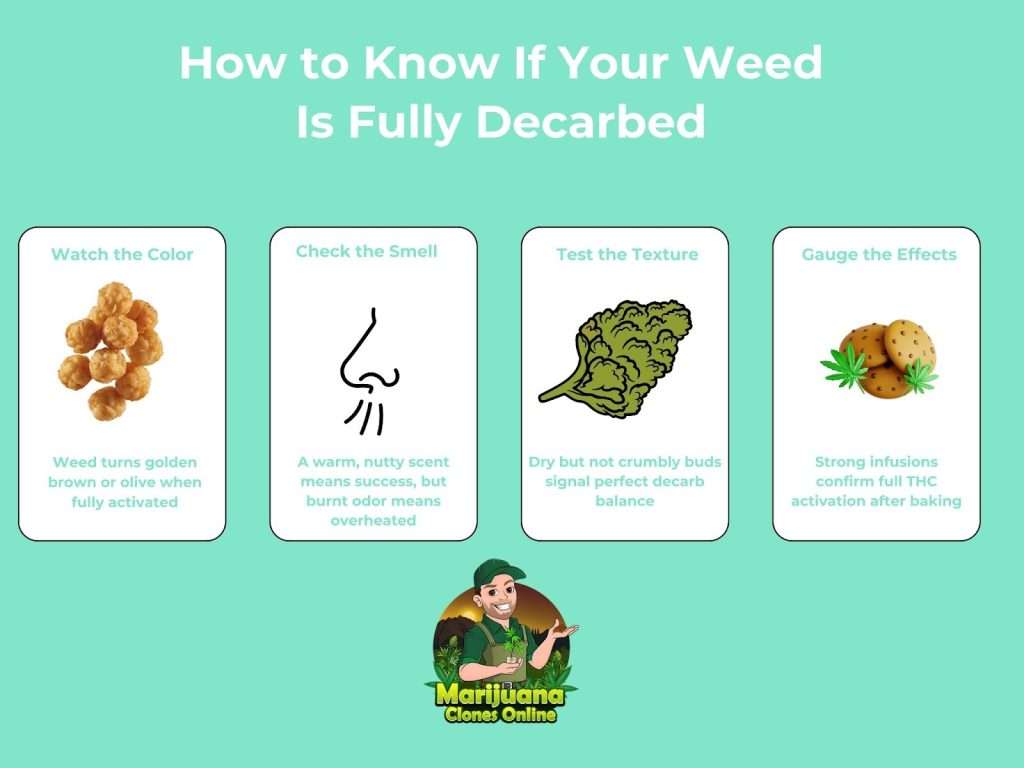
You don’t need lab equipment to tell if your cannabis is fully decarbed. But you do need to pay attention. Visuals, smell, and texture all shift once the transformation is complete. These signs will help you gauge the results so you don’t underactivate or burn off the cannabinoids you’ve worked so hard to grow.
Look for a Color Change
Properly decarbed weed will darken slightly. It usually shifts from bright or lime green to a golden olive or light brown. The exact color varies depending on strain and moisture level, but anything too dark or blackened means you’ve gone too far.
Smell Should Be Toasted, Not Burnt
The aroma is one of your best indicators. During decarb, you’ll notice a toasty, nutty smell that’s completely different from raw weed. If it smells harsh, like scorched plant matter, you’ve likely overheated it. That burned scent signals THC may have converted into CBN, which delivers more sedative effects.
Texture Will Be Dry But Not Crispy
After cooling, the buds should feel dry and slightly brittle, but not crumbly to the touch. If it falls apart into powder or feels overly crispy, that’s a sign of over-decarbing. On the other end, if the flower still feels spongy or sticky, it likely needs more time in the oven.
THC Effects Will Be Noticeable in Infusions
The real test happens after you infuse or cook with it. If your edibles don’t produce effects, or they feel weak despite using a solid amount, decarboxylation likely failed. This happens when the temperature was too low, the time too short, or the flower wasn’t dry enough going in.
How to Decarb Large vs. Small Batches
Decarbing a gram or two is one thing. Prepping ounces or pounds is a different operation entirely. Scale changes everything, from heat distribution to airflow. If you’re working with bulk THCa flower or a single nug for a batch of brownies, the approach must match the amount. The key is even exposure to heat, regardless of size.
Small Batch Decarbing (1 to 7 Grams)
For home growers making edibles or testing a new strain, small batch decarbing is simple and precise.
- Use a small baking tray or oven-safe dish lined with parchment paper.
- Break your buds into popcorn-sized chunks. No grinding needed.
- Spread the flower in a thin, even layer to avoid hot spots.
- Cover lightly with foil or use a lidded container to hold in terpenes.
- Bake at 220°F for 30 to 40 minutes, depending on moisture level.
- Let it cool before handling or infusing.
This method works well for testing new clones, dialing in recipes, or prepping personal-use edibles. With smaller amounts, it’s easier to correct mistakes and monitor progress.
Large Batch Decarbing (Quarter Pound or More)
Growers working with bulk flower need to approach decarbing with precision. The more material you process, the more room for error. That’s why commercial cultivators and high-volume home growers treat this as a controlled step, not a casual bake.
- Use large baking sheets or roasting pans and avoid stacking. Flower should be spread evenly and remain in a single layer.
- Work in batches if your oven space is limited. Overloading the oven reduces air circulation and leads to uneven heating.
- Monitor temperature with an oven-safe thermometer at tray level. Ovens often read inaccurately, especially when full.
- Use convection settings if available. They improve airflow and heat consistency across the tray.
- Rotate trays halfway through the bake to balance hot and cool zones.
- Add 5 to 10 minutes if your flower is especially dense, moist, or in large nuggets.
Timing Is Critical with Larger Loads
When decarbing large amounts, it’s better to run multiple smaller trays than cram everything into one. Time, temperature, and airflow all become harder to manage as quantity increases. It’s not about being fast. It’s about being effective.
You only get one shot to activate your cannabinoids without degrading them. That’s why growers working with pounds of our flower often use commercial-grade decarboxylators. These machines apply controlled heat with exact precision and remove all guesswork.
Common Mistakes (and How to Avoid Them)
Even experienced growers run into issues when decarbing cannabis. The process seems simple, but small errors lead to weak potency, lost terpenes, or unusable product.
Here are some of the things you should avoid:
Using the Oven Dial Without Verifying Temperature
Oven settings often lie. Many run hotter or cooler than the display suggests. That gap can push cannabinoids past their activation point and straight into degradation.
Placing an oven thermometer inside gives you the truth. Set your oven to 220°F, then check where it actually lands. Accurate heat means active THC and preserved flavor.
Grinding the Flower Too Fine
Running weed through a grinder before decarbing seems like the efficient move. In reality, it’s one of the fastest ways to burn trichomes and lose potency.
Breaking buds by hand into small chunks keeps trichomes intact and creates even airflow. It also prevents hotspots from forming across your tray.
Decarbing Moist or Fresh-Cut Flower
Cannabis that hasn’t been dried properly still holds water. That moisture blocks heat from penetrating evenly and throws off the decarb timing.
Fully cured flower performs best. If your buds feel spongy or sticky, they need more drying time before entering the oven. Starting with cured THCa flower from Marijuana Clones Online sets you up for a smooth, even process.
Overheating or Baking Too Long
Turning up the temperature in hopes of speeding things up leads straight to cannabinoid loss. The same goes for leaving flower in the oven longer than necessary.
Stick with 220°F for 30 to 45 minutes. If your flower smells burned or turns black, the THC likely broke down into CBN, and the potency is gone.
Ignoring the Cool-Down Phase
Pulling your tray from the oven isn’t the finish line. Popping the lid or foil immediately lets steam and aroma rush out, along with the delicate terpenes you want to preserve.
Let your flower cool naturally on the counter before disturbing it. Once the heat drops, those compounds settle back into the plant instead of vanishing into the air.
Decarbing the Same Batch Twice
Trying to fix a weak edible by heating the leftover weed again does more harm than good. Once THC has started degrading, a second bake speeds up that breakdown.
Accurate temperature and timing from the start removes the guesswork. Once decarbed, the flower is ready to infuse or store. There’s no benefit in sending it back through heat again.
Treating All Batch Sizes the Same
An eighth and a pound don’t decarb the same way. Larger volumes create uneven exposure to heat if they’re packed too tightly or layered too thick.
Spread cannabis in a single layer on shallow trays. For big harvests, break the process into multiple trays instead of one massive load. This keeps activation even and avoids hotspots. Our bulk buyers follow this exact method to protect their investment in premium flower.
Opening the Oven Mid-Bake
Each time the oven door swings open, the temperature drops. That fluctuation slows the process and invites uneven activation.
Once the tray is inside, keep the door closed and let the cycle finish. Using a thermometer eliminates the need for constant checking.

Decarbing Is the Key to Potent Weed Products
No step in cannabis prep carries more weight than decarboxylation. It’s the moment your flower transforms from inactive plant matter into a tool for edibles, oils, tinctures, and topicals. Skip this step or get it wrong, and everything that follows suffers. Done right, the entire plant opens up: THC activates, terpenes hold their flavor, and your final product actually delivers what you intended.
The process doesn’t have to feel technical. It just needs care. Temperature, time, batch size, and method all matter. Whether you’re baking a gram in your kitchen or decarbing pounds of high-end flower, the same rule applies: respect the heat, respect the plant.
Our customers at Marijuana Clones Online work with some of the best cannabis genetics in the country. That means THCa flower loaded with potential, and clones built for consistency. These strains are designed to perform, but they won’t reach full expression unless you take them through a proper decarb.
Want premium THCa flower that actually decarb into potent, flavorful edibles? Check out Marijuana Clones Online’s current strains and THCa flower here.