

Have you ever wished you could replicate your favorite cannabis plant with all its flavor, yield, and potency intact?
Cannabis cloning makes that possible.
It’s a simple but powerful technique that allows growers to produce identical plants.
But how does cannabis cloning actually work? Read on.
This guide breaks down the process step by step, explains the science behind it, and reveals why cloning gives you a reliable path to faster, better harvests.
What Is Cannabis Cloning?
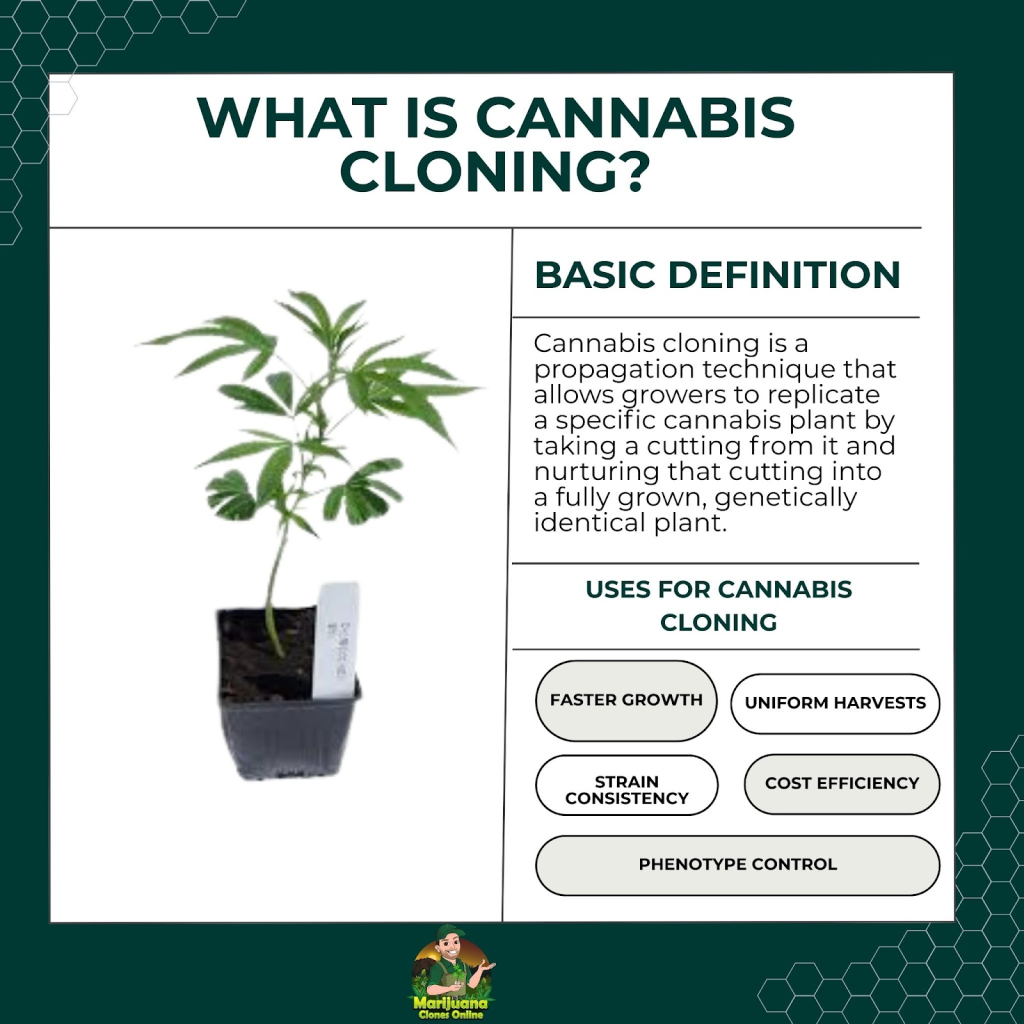
Cannabis cloning is a propagation technique that allows growers to replicate a specific cannabis plant by taking a cutting from it and nurturing that cutting into a fully grown, genetically identical plant.
It’s exactly how we make our award winning cannabis clones for our customers.
This technique is rooted in biology. When a branch or shoot is removed from a healthy, established cannabis plant and given the right conditions, it can grow roots and become a new plant. That new plant carries the same DNA as the original, including its potency, flavor profile, yield potential, and growth behavior.
Seedlings, by contrast, are unpredictable. Each one contains a different genetic expression, which means you never know what you’re going to get. One seed might grow tall and fast with light-colored buds. Another from the same pack might stay short and yield low. Cloning removes that guesswork completely.

Why Growers Prefer Clones Over Seeds
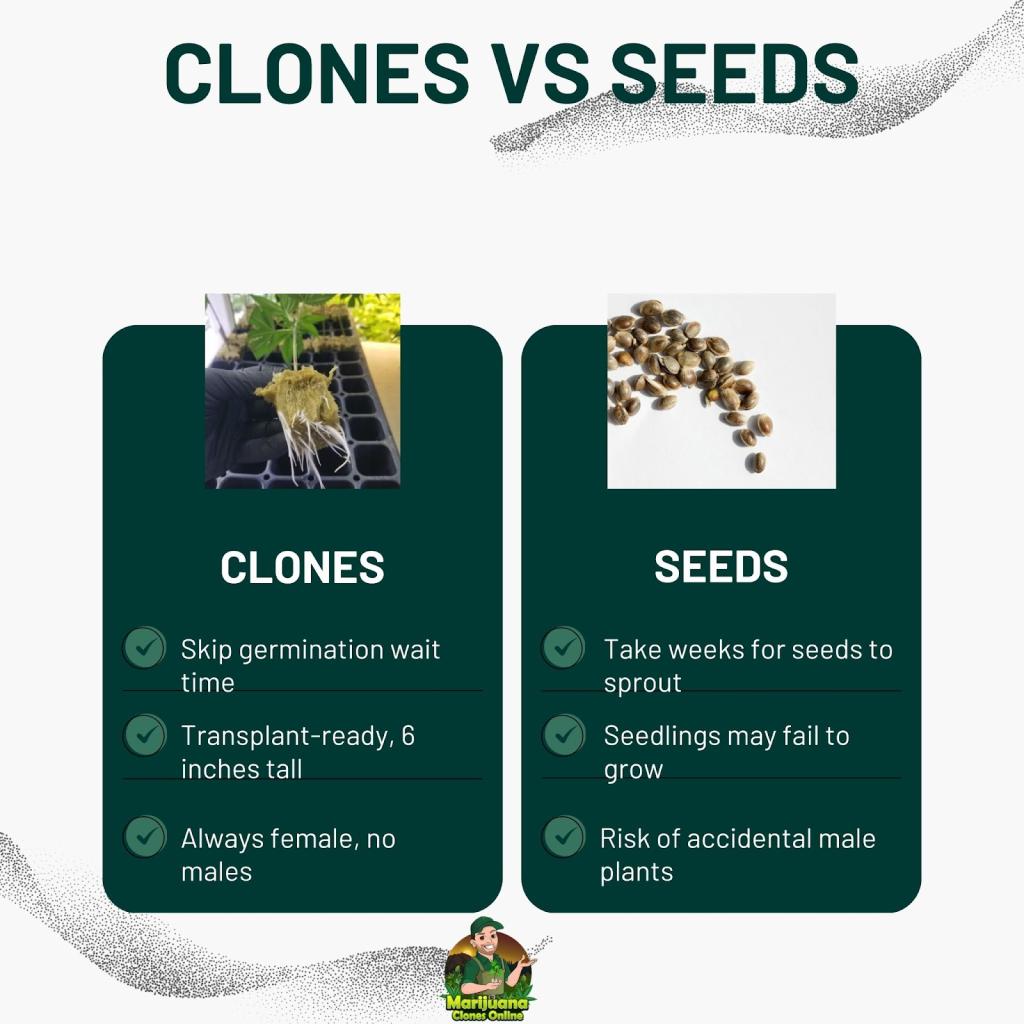
Every decision in a successful grow starts with genetics, and clones give growers full control from day one. These are the reasons growers make the switch.
Guarantee Consistency
Every clone is a genetic match of a proven mother. That means identical growth structure, cannabinoid profile, and yield. Seeds, even from the same pack, behave like siblings. Each one expresses traits differently. Clones act like a well-trained team. No surprises. No underperformers.
Save Weeks of Time
Seeds take time to germinate, develop their root systems, and declare their sex. That process adds four to six weeks to the timeline. A rooted clone skips all that. It’s already in veg mode. Many growers flip to flower much sooner and reach harvest faster.
Remove the Risk of Male Plants
Seed-grown gardens face the threat of male weed plants that can pollinate your females and ruin an entire crop. Clones are always female. No guessing, wasted space, or need to stress about finding and removing males midway through a grow. We discuss more about male vs female plants here.
Preserve Potency and Terpenes
Seed phenotypes can swing wildly in potency and flavor. One might hit 20 percent THC. Another might fall flat. Cloning locks in results. If the mother had sticky, high-THC buds with loud terps, every clone will too. It’s how breeders preserve strain quality over time.
Offer Predictable Results
If you’re managing lighting, nutrients, and space, it helps when your plants grow at the same rate and finish at the same time. Seedlings grow at their own pace. Clones create harmony in the garden and make environmental control easier.
When to Clone a Cannabis Plant
The best time to clone is during the vegetative stage. At this point, the plant is focused on growing leaves and branches, not flowers. That means more energy is available to support a new cutting as it builds roots.
Some growers try to clone during the flowering stage, and while it can be done, it’s rarely worth the effort. Clones taken from flowering plants must revert to a vegetative state before rooting properly. That transition slows the process and often results in weaker clones with unpredictable growth. For clean, fast, and reliable results, clone from a healthy vegging mother.
Autoflowering strains should be avoided altogether. These plants follow a strict genetic schedule and don’t respond to light cycles. Since they flower automatically, cloning them rarely works. Even if roots form, the clone is already on a countdown to flower, leaving little time for meaningful growth
Tools, Hormones, and Equipment You’ll Need
Cloning cannabis doesn’t require a commercial lab, but it does demand the right tools and environment. Successful cloning starts with preparation.
Every item on this list plays a specific role in ensuring your cuttings root fast and stay healthy.
- Sharp, Sterile Scissors or Razor Blade. Clean cuts promote faster healing and root development. Always sterilize your cutting tool with alcohol or diluted hydrogen peroxide to prevent contamination.
- Rooting Gel or Powder. Auxin-based rooting hormones stimulate root growth at the cut site. Gels coat the stem and stick better than powders.
- Humidity Dome and Tray. High humidity is essential for clones in the first 7 to 10 days. A dome traps moisture and protects the cutting while it develops roots. Without one, the clone dries out and dies before roots can form.
- Rooting Medium. Rockwool cubes, root plugs, or peat pucks are commonly used. These hold moisture and support the clone during early root growth.
- Spray Bottle. Use clean, chlorine-free water to mist the dome and leaves. This keeps humidity levels stable and prevents dehydration while the plant lacks roots.
- Heat Mat (Optional but Recommended). Consistent root zone temperature around 75 to 80 degrees Fahrenheit improves root initiation. A heat mat with a thermostat prevents cold shock and promotes strong root development.
- Low-Intensity Light Source. T5 fluorescent tubes or LED bars provide gentle light without heat stress. Avoid high-intensity HID lights that can dry out or fry your clones.
- Alcohol or Hydrogen Peroxide. Clean all surfaces, tools, and hands before cloning. Contamination leads to damping-off, fungal infections, and failed clones.
- Labeling Materials. If cloning multiple strains, label every tray and plug. Strain mix-ups are common, especially when plants look identical in early stages.
How to Clone Cannabis Step-by-Step (With Pro Tips)
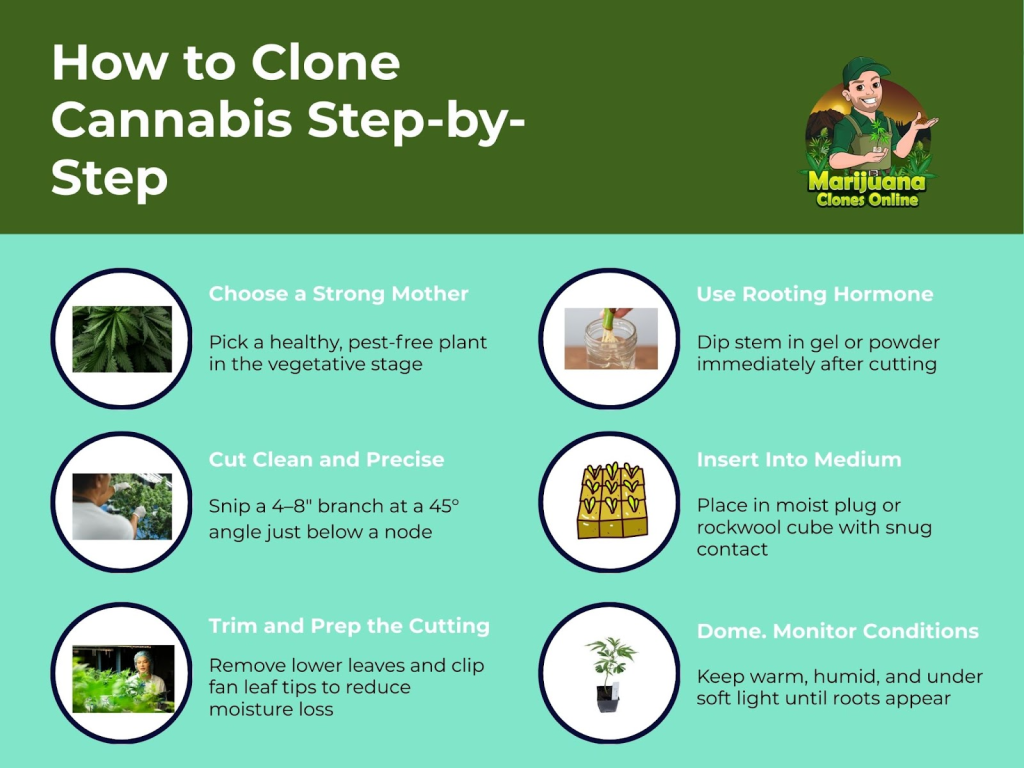
Cloning is not difficult, but success hinges on precision. Each step plays a role in shaping the health and strength of the new plant.
Rushing through this process or skipping the details can lead to wilted, moldy cuttings or weak roots. Here’s how you should do it.
Step 1: Select a Healthy Mother Plant
Choose a mother in the vegetative stage that’s vibrant, pest-free, and strong. The better the health of the mother, the stronger the clones. Avoid stressed or flowering plants, which take longer to root and may carry hormonal imbalances. You want to make sure you only attempt cloning with photoperiod plants. Autoflower plants cannot be cloned successfully, so it’s important to know the differences between photoperiod vs autoflower plants before taking your first cuts.
Step 2: Sterilize Everything
Use alcohol or hydrogen peroxide to sterilize scissors, trays, and your hands. Cloning introduces open wounds to the plant. Any bacteria or fungi on your tools can lead to infection and rot.
Step 3: Take the Cutting
Using a clean blade, snip a branch that’s four to eight inches long. Cut below a node and angle the cut at 45 degrees to maximize surface area for rooting. Make the cut quick and clean. Damaged tissue slows root formation.
Step 4: Trim Fan Leaves
Remove the lower leaves entirely and clip the tips of large fan leaves. This reduces moisture loss through transpiration and helps the plant redirect its energy toward root development instead of trying to support excess foliage.
Step 5: Dip in Rooting Hormone
Immediately dip the fresh cut into a rooting gel or powder. Cover about an inch of the stem, especially the cut area. This encourages root cells to form quickly. Some growers experiment with aloe vera, but high-performance rooting gels remain the gold standard.
Step 6: Insert into Growing Medium
Place the treated cutting into a pre-soaked rockwool cube or rooting plug. Make sure the stem is snug and upright. Loose fits allow air pockets, which reduce contact and delay root growth.
Step 7: Place in a Humidity Dome
Set the tray and dome under a low-intensity light source. Keep the environment at 70 to 85 degrees Fahrenheit with humidity above 70 percent. Mist the dome walls, not the plants. Leaves should look hydrated but not dripping.
Step 8: Monitor Closely and Keep Conditions Stable
Use an 18/6 light cycle and avoid placing clones under intense lighting. Maintain high humidity, and avoid overwatering the plugs. Clones wilt when water balance breaks down. If leaves sag within 24 hours, check humidity. This is the number one reason new growers lose clones early.
Step 9: Look for Root Development
In about 7 to 14 days, roots should begin emerging from the bottom of the plug. Some strains take longer. Don’t rush the process. Plants that appear stalled may still root successfully if conditions remain stable.
Step 10: Harden Off the Clones
Before transplanting, begin removing the dome for short periods to lower humidity gradually. This helps the plant adapt to open-air environments. Skipping this step often leads to transplant shock.
What to Expect During the Rooting Phase
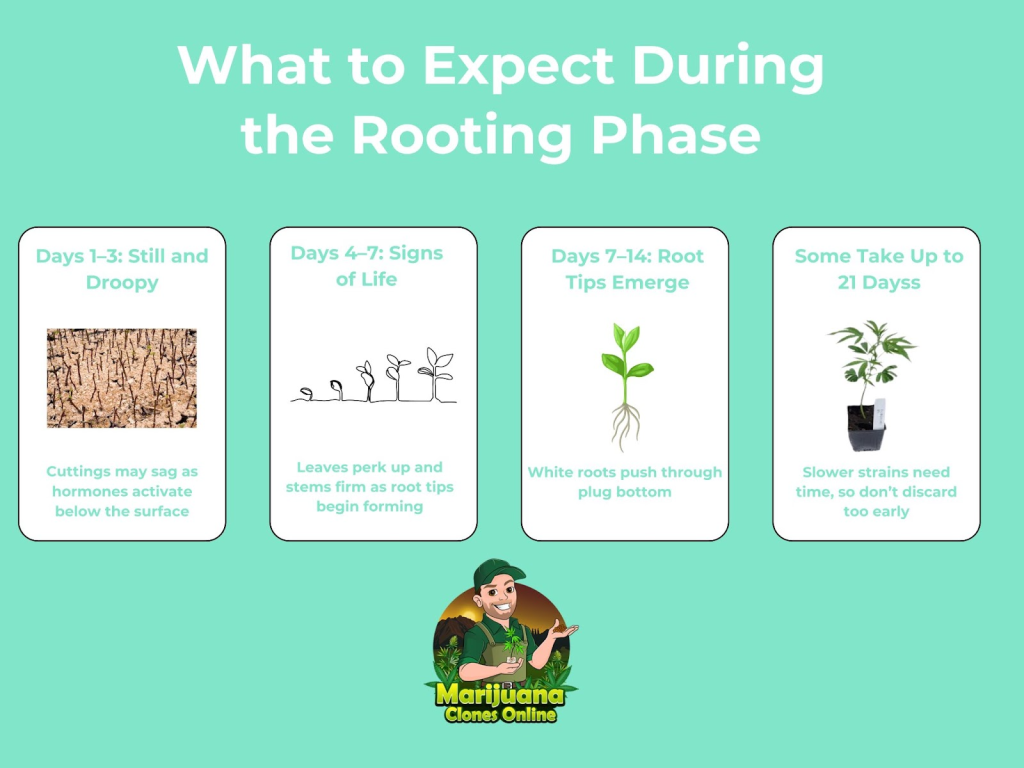
Cuttings often look fragile, sometimes even lifeless, in the first few days. That’s normal. The plant is shifting its energy toward root development, and this process takes time. Here’s what you can expect once your clones are tucked into their trays.
- Day 1 to 3: Minimal Visual Change. Cuttings will appear still or even droopy. This doesn’t mean they’ve failed. During this phase, internal hormone activity begins building root structures you can’t yet see.
- Day 4 to 7: Signs of Life. Some clones begin perking up. Leaves regain turgor, and the stem may firm up slightly. The base of the cutting may begin swelling, a sign roots are forming.
- Day 7 to 14: Visible Root Tips Appear. White root tips emerge from the bottom of the plugs. Once roots are visible and at least an inch long, the clone is ready for transplant. Some slower strains may take longer, and that’s fine. Don’t rush them.
- Early Yellowing Can Happen. Lower leaves may yellow slightly as the plant reallocates energy. This is usually normal. If the entire cutting turns pale or wilted, reassess humidity, temperature, and airflow.
- Mold Risk Increases Over Time. Extended humidity without proper ventilation creates the perfect environment for mold and mildew. Open the dome daily for fresh air, and wipe down condensation. Adding airflow helps prevent fungal issues.
- Root Rot from Overwatering. Roots need oxygen. Oversaturated plugs prevent airflow and create a breeding ground for rot. The medium should feel damp, not soaked. If roots turn brown and smell foul, they’ve likely begun to rot.
- Some Clones Take Up to 21 Days. Not all strains root at the same pace. Sativas and slower-growing genetics may take longer. Keep conditions stable, and avoid the urge to discard cuttings too soon.
- Clones May Look Dead Before They Explode with Roots. Some of the best-performing clones look like wilted scraps during week one. Then, with no warning, they pushed roots like champions. Never count them out early.
Maintaining Mother Plants for Long-Term Success
Strong clones start with strong mothers. A well-maintained mother plant delivers reliable cuttings, preserves genetic quality, and supports long-term cloning success. These are the fundamentals every grower should follow.
- Choose Proven Genetics. Select mother plants from top-performing phenotypes. Look for potency, terpene expression, and structure that match your goals.
- Keep in Vegetative Stage. Maintain an 18/6 light cycle. Avoid triggering flower, which disrupts clone quality and delays rooting.
- Feed for Strength, Not Speed. Use a nutrient profile with lower nitrogen and balanced phosphorus to encourage sturdy, rooted growth.
- Prune and Train Regularly. Top and shape to promote horizontal growth. This creates more cut sites and keeps the plant compact. Topping cannabis plants early in the vegetative stage will be beneficial for mother plants, giving them more lateral growth and more nodes to clone from.
- Avoid Root Binding. Use pots that allow root expansion. Small containers stress the plant and lead to weak, woody cuttings.
- Prevent Pest and Mold Issues. Keep the grow area clean. Defoliate to improve airflow and monitor for pests weekly.
- Rotate Mothers When Needed. Replace older mothers showing signs of decline. Strong replacements ensure clone quality stays high.
- Tissue Culture for Long-Term Storage. Preserve elite genetics without degradation. Tissue culture offers a sterile, scalable solution for serious growers.
Common Cloning Mistakes and How to Avoid Them
Cloning cannabis doesn’t require advanced skills, but small mistakes can make or break your results. Poor conditions, incorrect techniques, or overlooked details often lead to failure. These are the most common cloning errors, and how to keep your cuttings thriving instead.
Over-Misting the Leaves
Heavy leaf misting reduces oxygen flow and increases the risk of mold. Mist the dome instead to maintain high humidity without soaking the plant.
Using Flowering Cuts
Clones taken during flowering take longer to root and may struggle to revert. Always cut during the vegetative stage for faster, healthier growth. understanding the weed plant stages is critical to not screw up your first cloning experiment. Not sexing your plants if you got them from seed is another critical error a new cloner can make, because you definitely don’t want to find out two months later that you’ve got a batch of new male plants that will ruin your crop.
Improper Light Intensity
Bright, hot lighting stresses clones and leads to wilt. Use low-intensity T5 or LED lighting to keep temperatures mild and prevent dehydration.
Feeding Nutrients Too Early
Clones have no roots to absorb nutrients in the beginning. Stick with water and light only until roots form. Adding nutrients too soon causes burn or stunted growth.
Skipping Sterilization
Dirty tools, trays, or surfaces introduce pathogens. Always sanitize with alcohol or hydrogen peroxide before and after every cloning session.
Crowding the Dome
Overpacking trays limit airflow and create competition for moisture. Give each cutting space to breathe and develop evenly.
Neglecting to Trim Fan Leaves
Full-size leaves pull moisture from the cutting. Trimming reduces transpiration and directs energy to root formation.
Transplanting Too Soon
Wait until roots are visible and strong, usually 7 to 14 days. Transplanting early increases the risk of shock or failure.
Should You Try Cannabis Cloning?
Cloning cannabis gives growers something seeds never will.
And that is certainty.
This technique removes the unknowns, fast-tracks the grow cycle, and ensures every plant delivers the traits you already trust. Clones are identical to their mother, which means if you loved the yield, flavor, and strength once, you can experience it again and again.
Home growers benefit from fewer mistakes and faster harvests. Commercial cultivators use cloning to create repeatable results and maximize space. First-time growers love the head start. There’s a reason cloning is the standard in professional grows across the country.
Growers who start with strong genetics grow strong plants. That’s where Marijuana Clones Online makes the biggest difference.
Start Your Next Grow with Confidence
Explore our elite, phenohunted cannabis clones or extra large cannabis teens that deliver the consistency, speed, and quality you need to elevate every harvest.