
Harvest marijuana when most trichomes are milky white and 10–20% are amber. This is when THC is at its peak and terpenes are fully developed. You’ll also want to see 60–70% of pistils darkened and curling in. But don’t rely on color alone. Strain, grow setup, and effects you’re chasing all play a role.
Not sure whether to trust trichomes, pistils, or your gut?
Let’s clear that up.
This guide covers how to harvest at the perfect moment for peak cannabinoid and aroma profiles.
Let’s dive in.
What Is the Harvesting Window?
The harvesting window is the ideal timeframe to cut your cannabis plants for peak potency, flavor, and effect. It is not a fixed date you can circle on the calendar, but a phase your plants reach when the chemical profile and physical cues align.
Every grow is unique, and even clones of the same strain can mature at slightly different rates depending on how they’re raised.
Top Signs Your Cannabis is Ready
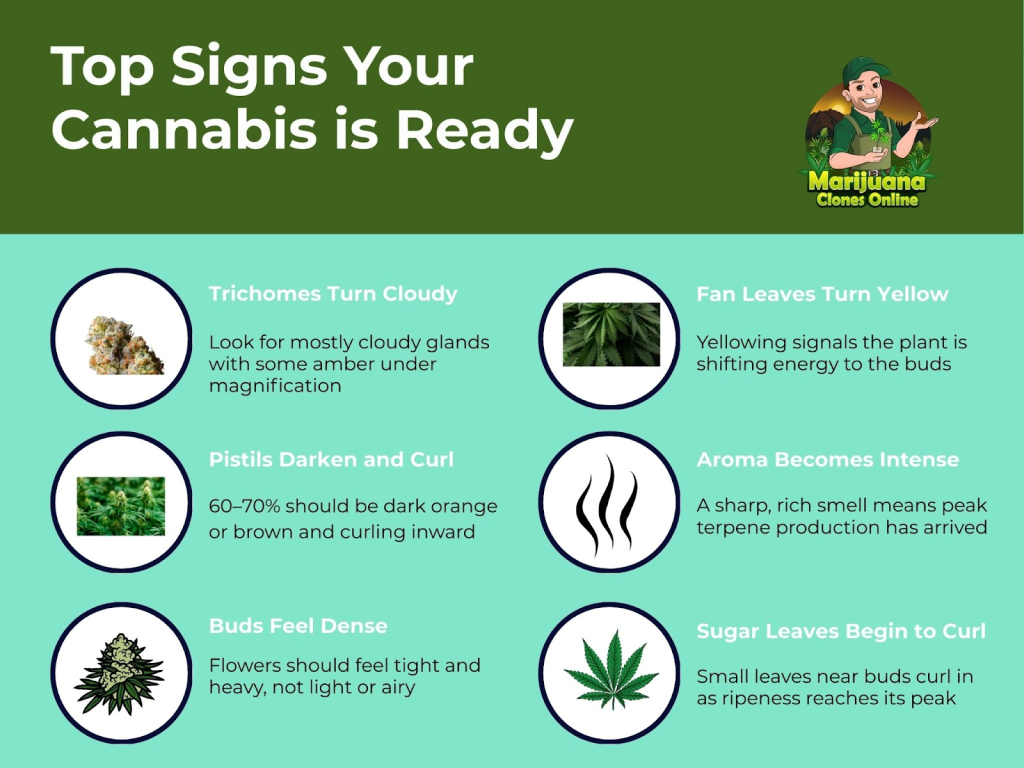
Every plant speaks in its own way, and if you’re paying attention, it tells you exactly when it’s ready to be harvested.
Here are a few things to look for:
Trichome Color Shift
Trichomes are the tiny resin glands coating your buds and sugar leaves. Under magnification, they resemble glass mushrooms. These glands change from clear to milky to amber as cannabinoids mature. Most growers aim to harvest when trichomes are mostly cloudy with a touch of amber.
This balance gives you the best combination of potency and nuanced effects. Clear trichomes mean it’s too soon. All amber means THC has begun to degrade.
Pistil Darkening and Curling
Pistils start out white and upright, but as the plant matures, they darken and curl in toward the bud. You’re looking for 60 to 70 percent of pistils to be dark orange or brown and pulling back into the flower. If pistils are still mostly white, your plant is still developing.
Be cautious, as some strains can show early pistil color changes due to stress or lighting conditions.
Bud Density and Structure
Mature buds feel solid and tight when gently squeezed. They should no longer be light or airy. Well-developed flowers often take on a plump, swollen appearance, especially in the final week. If you notice the buds are still expanding or adding weight, you may benefit from waiting a bit longer.
Fan Leaf Yellowing
As your plant shifts energy into flower production, fan leaves will start to fade from green to yellow. This is a normal sign that the plant is nearing the end of its life. It reflects nitrogen being pulled from older leaves to feed the maturing buds. If your fan leaves are still fully green, your plant likely needs more time.
Aroma Intensifies
Your nose is one of your best tools. When your grow space starts to smell sharp, rich, and full-bodied, it’s usually a sign that the terpenes have peaked. Some growers harvest based on aroma strength alone, especially for strains known for intense flavor profiles.
Sugar Leaf Curling
Sugar leaves, the small leaves closest to the buds, begin to curl slightly inward as buds reach full ripeness. This curling, along with trichome coverage, helps lock in cannabinoids and terpenes. It’s a subtle sign, but it adds another layer of confirmation when paired with trichome color.

How Harvest Timing Changes Indoors vs Outdoors
The environment your cannabis grows in plays a major role in how and when it ripens. Indoor and outdoor plants follow different rhythms. If you try to apply the same harvest strategy to both, you will either pull too early or miss your peak window.
Indoor Harvest Timing
Indoor growing offers a level of precision that allows you to predict and plan your harvest window more confidently.
- Stable conditions support predictable timelines. When light, temperature, and humidity are carefully controlled, flowering times often align closely with what the breeder describes.
- Environmental balance encourages uniform ripening. Balanced airflow and moisture levels help plants finish at the same pace, especially when grown from clones.
- Trichome color may be misleading under artificial lighting. Bright indoor lights can distort how trichomes appear. Use neutral lighting when inspecting them to ensure accurate readings.
- Light adjustments can influence final ripening. Some growers shorten the light cycle or reduce intensity near the end of flower to encourage a quicker finish and richer resin development.
Outdoor Harvest Challenges
Outdoor cannabis grows on nature’s schedule, and you have to read the signs the environment gives them.
- Seasonal changes drive ripening. As daylight hours decrease and nighttime temperatures drop, the plant receives natural cues to complete its flowering stage.
- The weather can cut harvest short. Early frost, unexpected rain, or high humidity often force growers to harvest slightly earlier than planned to avoid crop loss.
- Foxtailing causes confusion. Heat or light stress can lead to foxtailing, which adds new growth on top of buds. This growth may look immature even when the plant is ready.
Harvesting Based on Your Goals
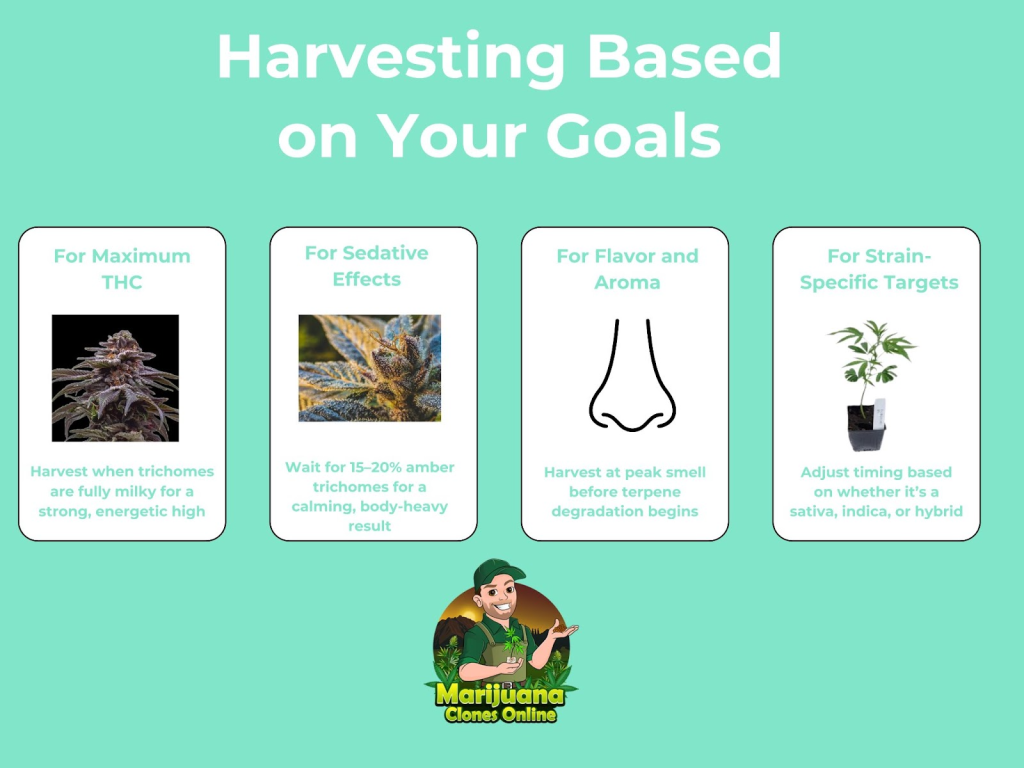
Every grower is chasing something a little different. Some want a hard-hitting THC punch, others prefer a mellow, balanced high, and a few are focused on CBD-rich flower. Your harvest timing directly shapes the kind of experience your buds deliver.
Here is a checklist:
Maximum THC
The highest concentration of THC is found when trichomes turn milky. This cloudy appearance means the resin heads are fully developed and loaded with cannabinoids. At this stage, the high tends to be energetic, cerebral, and euphoric. The moment you start seeing amber trichomes, that THC is beginning to degrade into CBN.
Relaxing or Sedative Effects
If you prefer a calming, body-heavy high, you’ll want to let your plants go a little longer. As more trichomes turn amber, the THC begins converting to CBN, a compound known for its sedative properties.
Around fifteen to twenty percent amber trichomes create that stony, couch-lock experience. For sleep-focused cultivars or pain relief, this window delivers a more soothing outcome.
Flavor and Aroma
Some growers chase terpenes as much as cannabinoids. Terpenes are the compounds responsible for the plant’s flavor and smell. These volatile compounds peak slightly before full cannabinoid maturity. A sharp, distinct aroma often signals peak terpene expression.
If you wait too long after this moment, the terpenes begin to degrade, and your buds may lose that rich, layered scent profile.
Matching Maturity to Strain Type
Every strain expresses differently. Some sativas continue developing resin and scent later in flower. Indicas may finish earlier and produce heavier amber trichomes faster. Even within the same strain, different phenotypes can vary slightly.
Observation always trumps the calendar.
One of the most effective ways to dial in perfect timing is by growing from high-quality clones that offer genetic consistency. That’s why our phenohunted cuts at Marijuana Clones Online are built for reliability. You’ll know exactly how your strain behaves and when it is most likely to reach its peak.
Early vs Late Harvest: What Happens If You Miss the Sweet Spot?
Understanding the weed plant stages and timing your harvest right can be the difference between flower that sings and flower that falls flat. Most growers worry about pulling too early or waiting too long, and both can impact your final product in major ways.
Here is the truth.
Harvesting Too Early
Harvesting before your plant finishes its ripening cycle can rob you of potency, flavor, and yield.
- THC levels are still developing. Trichomes remain mostly clear, which means cannabinoids are not fully matured.
- High feels thin and fast. Effects are often quick and short-lived, lacking the depth of a fully ripened plant.
- Aroma and flavor fall short. Terpenes are still forming, so the flower may taste grassy or bland.
- Buds can dry unevenly. Moisture content is inconsistent, making curing more difficult.
- Final weight is reduced. Skipping the last stage of bud swelling can lower your yield significantly.
Harvesting tip: Take a few test branches, dry and cure them, and assess the results before cutting the whole plant.
Harvesting Too Late
Letting your plant go too far past its prime can degrade potency and increase risk.
- THC breaks down into CBN. Trichomes shift from cloudy to amber, leading to more sedative effects.
- High becomes heavy and sleepy. Overripe buds lose the clarity and brightness often desired from fresh THC.
- Terpenes begin to degrade. The smell becomes muted, and the taste can flatten or worsen with time.
- Bud rot and mold become real threats. Prolonged flowering invites pests, mildew, and disease, especially in humid conditions.
- Overall quality declines. Instead of reaching peak flavor and potency, the flower starts to fade.
Common Harvest Mistakes to Avoid
Harvesting cannabis may seem simple once you reach the end of the flowering cycle, but timing mistakes are incredibly common, even among seasoned growers.
The good news is you can avoid them once you know what to watch for.
Following a Timeline Without Observing the Plant
Breeders often list flowering times like eight to ten weeks, but these are only estimates. They do not account for variables like environment, lighting, or phenotype variation. Some growers get locked into these numbers and chop before the plant is truly ready.
Checking Only the Sugar Leaves for Trichomes
Sugar leaves tend to develop amber trichomes earlier, which gives a false sense of readiness. Always inspect trichomes on the actual buds, especially those in the middle of the canopy. That is where the most accurate maturity signs live.
Confusing Foxtailing for Immaturity
Foxtailing looks like new growth stacking on top of mature buds. It is usually caused by heat or light stress. Many growers mistake this for immature flower and wait too long to harvest.
If the trichomes are already cloudy or amber and the aroma is peaking, it is likely time to harvest, even if new points of growth appear.
Assuming Cloudy Trichomes Will Turn Amber After Harvest
Once the plant is chopped, trichomes stop maturing. Cloudy trichomes do not continue developing into amber after harvest. If you wait for more amber and do not see it, the plant may have reached its peak.
Ignoring Environmental Factors
Plants grown at high elevations or under intense lighting may develop slower or faster than expected. If you do not adjust your expectations to match your grow conditions, you risk misreading your harvest window. Trust what your plant shows you, not where it falls on a universal calendar.
Focusing on Pistils Alone
While pistils offer a good snapshot of bud development, they are not reliable on their own. Pistils can darken early from wind, heat, or other stress. Some strains also retain white pistils well into maturity. Always use pistils as a secondary sign to support trichome inspection.
Failing to Adapt When the Signs Change
Plants sometimes slow down near the end of flower, especially when environmental conditions shift. Waiting for everything to look perfect can cause you to miss the peak. If trichomes, aroma, and bud density all say the plant is ready, listen, even if pistils or leaf color lag behind.
So… When Should You Harvest?
There is no single answer. The right time to harvest is when your plant tells you it’s ready, and it speaks through more than one signal. You cannot rely on the calendar or a seed pack estimate. Your best harvests come from tuning in to the moment those signals align.
Most growers harvest when these signs align:
- Trichomes are mostly cloudy with 10–20% amber, marking peak THC.
- Pistils are 60–70% darkened and curled inward.
- Buds feel dense, sticky, and give off a strong, distinct aroma.
- Fan leaves start yellowing as the plant finishes.
If you are still unsure, harvest a single branch, dry and cure it properly, and sample the result. You will learn more from that small test than any calendar ever could. If you want to not blow it post harvest, you can find out complete guide on how to cure cannabis here.
Above all, be present. The plant will show you everything you need to know.

🌱 Start Your Grow with Genetics That Make Harvest Timing Easy
Shop premium cannabis clones today and harvest with confidence.
Our expertly selected cuts take the guesswork out of harvest timing, so you can focus on potency, yield, and flavor.
Get a head start by growing with phenohunted, clone-only genetics trusted by thousands of cultivators.