
What if the cannabis product you thought was harmless still carried hidden risks?
That’s the question more people are asking as THCa, short for tetrahydrocannabinolic acid, explodes in popularity. It’s marketed as non-psychoactive, legal, and safe, but just because it doesn’t get you high in its raw form doesn’t mean it’s totally free of side effects.
And that’s the topic of this guide.
But first, let’s know what THCa is and how it works.

How THCa Works in the Body
THCa, or tetrahydrocannabinolic acid, is the raw, acidic form of THC found in cannabis plants before they are exposed to heat. While THCa does not produce a psychoactive high in its natural state, its effects on the body still matter, especially if you plan to consume it regularly.
THCa’s relationship with the body is built on how it interacts with the endocannabinoid system. This system plays a key role in regulating functions like mood, appetite, pain, and immune response. Unlike THC, which binds directly with CB1 receptors to trigger intoxication, THCa interacts more gently, working around the edges of these receptors.
Common Side Effects of THCa
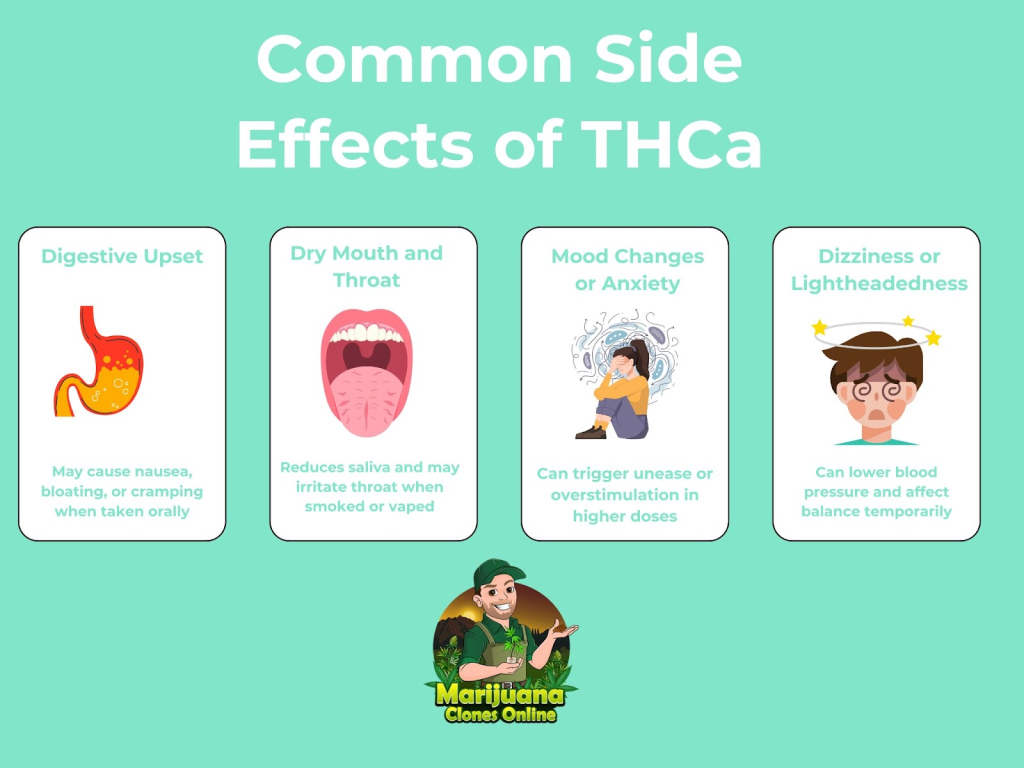
THCa is often described as a gentler option than THC. While it doesn’t produce a psychoactive high in its raw form, it still affects the body in noticeable ways. Side effects depend on dosage, method of use, and individual sensitivity. These effects are not severe for most people, but they should not be overlooked.
However, since THCa is the exact same as Delta 9, with no additives, it will only give the side effect that y ou would find with any cannabis flower you’d find at a recreational cannabis dispensary.
Digestive Upset
THCa can irritate the digestive system, especially when consumed as capsules or tinctures. It may cause bloating, cramping, nausea, or diarrhea. These effects are more likely when THCa is taken on an empty stomach or in larger amounts.
The raw acid form can be harder to process, which makes slow, cautious dosing important, especially for those new to cannabinoids.
Dizziness and Lightheadedness
THCa may lead to a drop in blood pressure shortly after consumption. This can result in dizziness or lightheadedness, particularly when standing up quickly or using faster-acting formats such as inhalation. Staying hydrated and seated during initial use helps minimize this effect.
Fatigue, Lethargy, and Brain Fog
Depending on the strain and dosage, THCa can cause a dip in energy or mental clarity. This may feel like general tiredness, lack of motivation, or mild cognitive dulling. Effects vary depending on the time of day it’s taken and the user’s tolerance level. Overuse or poorly chosen timing often contributes to these outcomes.
Dry Mouth and Throat Irritation
THCa reduces saliva production, which results in dry mouth. This is a common side effect across most cannabinoids. Throat irritation can also occur, particularly with flower or vaporized forms. Staying hydrated before and after consumption helps reduce discomfort.
Mood Fluctuations and Anxiety
In certain conditions, THCa may influence mood regulation. It can contribute to mental overstimulation or uneasiness, especially when consumed in high doses or when the cannabinoid profile is dominated by stimulating terpene combinations.
Will THCa Show Up on a Drug Test?
Yes. THCa in its raw form is not psychoactive, but that doesn’t mean it won’t cause issues on a drug test. Standard drug screenings are not designed to detect whether a compound is psychoactive.
They are designed to flag the presence of THC metabolites, specifically 11-nor-9-carboxy-THC (THC-COOH), which appear in the body after THC is consumed or formed.
THCa converts into THC when exposed to heat. This process is called decarboxylation. Once THCa becomes THC, it behaves like any other intoxicating cannabinoid. If smoked, vaped, or baked into edibles, that THC can trigger a positive drug test result.
Factors That Can Increase Side Effects
The way THCa affects the body is not only about the cannabinoid itself. Side effects become more likely when certain conditions are present. These include how the product is made, how it’s used, and the specific health factors of the person using it. Recognizing these variables helps minimize unwanted effects and improves the overall experience.
Product Quality
Low-quality THCa products often contain contaminants like residual solvents, pesticides, or mold. These compounds can create side effects that are not caused by THCa itself. Products that are poorly stored or improperly cured may also contain trace amounts of THC due to partial decarboxylation, increasing the risk of unexpected intoxication.
Method of Use
The form of THCa used plays a large role in how it affects the body. Smoking, vaping, or dabbing will convert THCa into THC through heat, which creates a different chemical profile and introduces psychoactive effects.
Even vape pens marketed as “raw” can reach temperatures that partially decarboxylate THCa. Capsules, tinctures, or raw flower consumed without heat will behave differently, but still carry side effect potential, especially at higher doses.
Dosage and Frequency
High doses of THCa can trigger side effects that would not appear at lower levels. These may include dizziness, digestive upset, or fatigue.
Repeated daily use can also change how the body reacts over time. Tolerance may develop, which could lead to increased dosage and higher chances of discomfort. Starting low and tracking response is a more stable approach.
Health Conditions
People with certain medical conditions may be more sensitive to THCa. Those with low blood pressure might feel dizzy after use. Individuals with gastrointestinal issues could experience cramping or nausea. For anyone with an autoimmune condition, there’s concern that THCa’s immune-suppressing qualities might aggravate symptoms.
These risks highlight the importance of speaking with a qualified medical professional before introducing THCa into a wellness routine.
Other Substances
Using THCa alongside caffeine, alcohol, or certain medications may create interactions that increase side effects. Caffeine can intensify overstimulation or anxiety. Alcohol may compound fatigue or slow reaction time. Medications like blood thinners or immunosuppressants may interact in unpredictable ways. Until more clinical data exists, caution is the best strategy.
Safety Tips for First-Time or Daily THCa Users
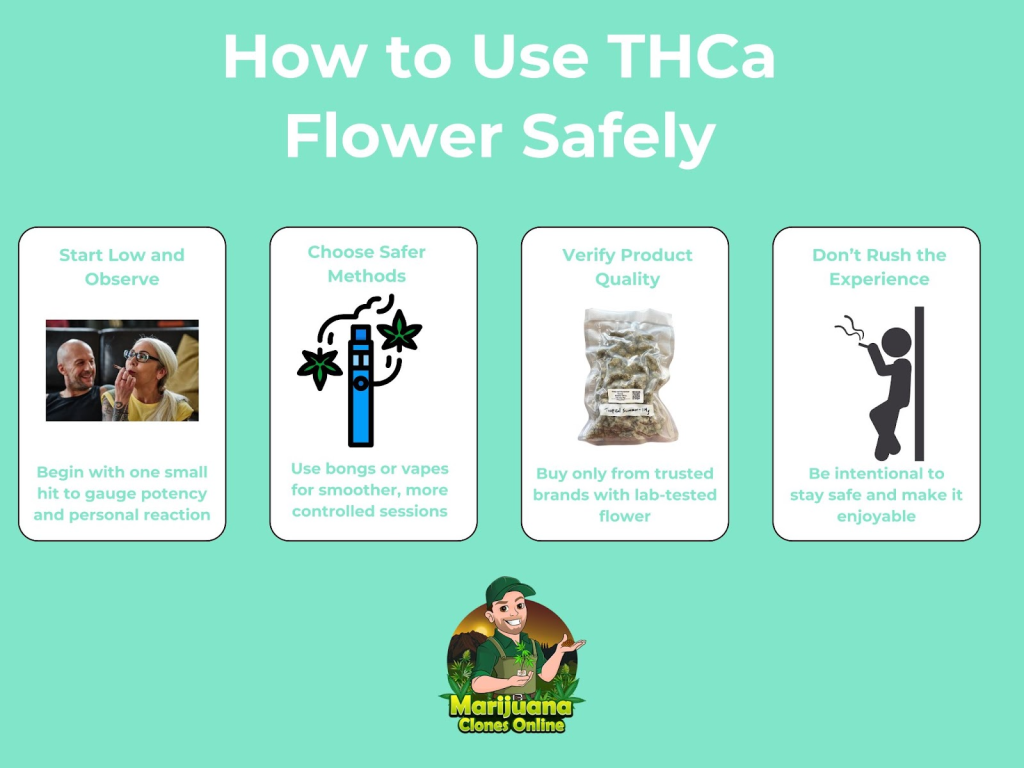
Using THCa safely starts with respecting its potential. While it may seem less intense than THC, it still affects the body, and the way it’s used determines whether those effects are helpful or uncomfortable.
Whether you’re trying THCa for the first time or adding it to your daily routine, these guidelines help create a smoother, more controlled experience.
Start Low, Increase Slowly
Begin with a small amount, especially if using raw capsules, tinctures, or flower. THCa can have strong effects on digestion, blood pressure, and mood when taken in large doses. A gradual approach gives your body time to adjust and lowers the risk of dizziness, nausea, or fatigue. THCa will absolutely get you high, so just use the same level of caution that you would with any other weed you’d find at your local dispensary.
Store Products Correctly
Keep THCa products in a cool, dark environment to prevent accidental decarboxylation. Exposure to heat, light, or air can cause THCa to convert into THC, changing its effects. Flower left in a hot car or stored near a heat source may create a product that is no longer non-intoxicating.
Verify Product Quality
Always choose products from companies that provide third-party lab results. Lab-tested THCa confirms cannabinoid levels, verifies purity, and screens for contamination. Mislabeling, mold, or chemical residues are more common in unverified sources, and they increase the chances of side effects.
Avoid Infused or Mislabeled Products
Some flower and vape pens marketed as THCa may contain THC or other compounds due to poor quality control. Look for transparency in the labeling and be cautious of products that promise effects that seem too strong for a non-psychoactive cannabinoid. THCa that produces a “high” has likely converted to THC.
Do Not Use During Pregnancy or Nursing
THCa has not been proven safe for pregnant or breastfeeding individuals. The potential for immune or hormone disruption, combined with the unknown effects on fetal development, makes it a poor fit for these stages of life. Choosing to wait is a safer route.
Be Aware of Allergies and Sensitivities
Cannabis allergies are real, and THCa can trigger skin reactions, respiratory symptoms, or digestive upset in people who are sensitive. Those with known allergies to cannabis, mold, or specific plant compounds should approach carefully and monitor for early warning signs.
Know When to Stop
If THCa creates repeated issues, such as persistent nausea, dizziness, anxiety, or changes in mood, take a break. Continued use despite discomfort increases the risk of larger problems. Side effects are a signal. They should never be ignored or pushed through.
Is THCa Worth the Risk?
THCa has earned a reputation for being a milder, non-intoxicating option for those seeking the therapeutic potential of cannabis without the mental fog or high. That reputation is mostly deserved, but it’s not the full picture.
THCa still interacts with your body in real ways. It can affect digestion, energy, mood, and even medication response. If it’s heated, stored poorly, or mislabeled, it may not behave the way you expect.
The real risk doesn’t come from THCa itself. It comes from misunderstanding how it works, using inconsistent products, or ignoring the variables that increase side effects.
For many, especially those who value clarity, control, and a lighter cannabis experience, the benefits of THCa are worth exploring. But the key is to stay informed, start slow, and source wisely.
Looking for lab-tested, top-shelf THCa flower?

Browse Marijuana Clones Online’s selection of premium THCa products and grow your own with confidence.