
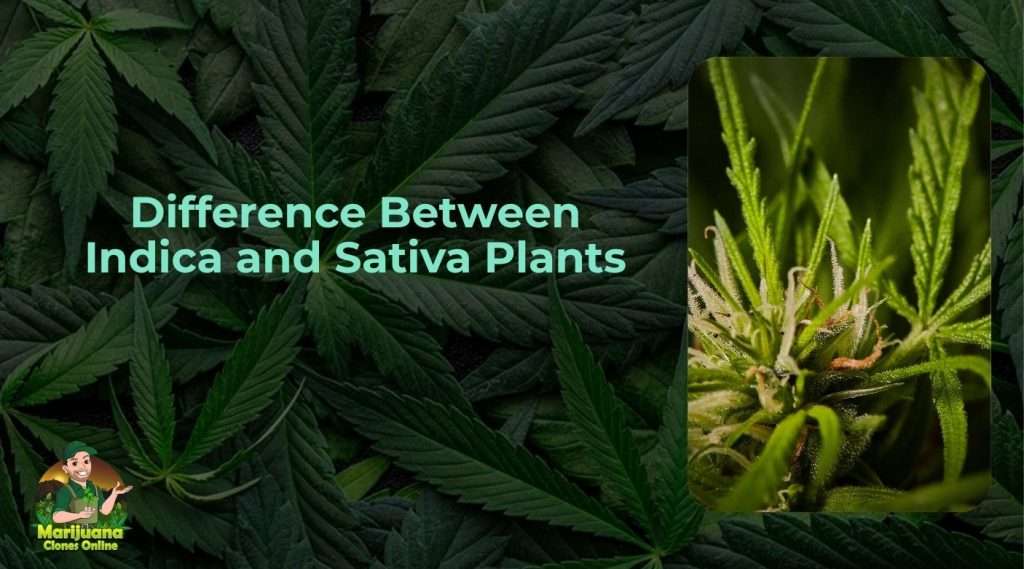
Indica plants grow short and fast with dense buds, perfect for small spaces. Sativas, on the other hand, stretch tall, take longer to flower, and love the sun.
But which one is truly better for your grow setup, yield goals, and environment?
Read on to learn the key differences in structure, yield, and cultivation needs to choose the best fit for your grow setup.
Physical Differences Between Indica and Sativa Plants
Indica and Sativa plants develop in very different ways, and these visual traits can give you valuable insight into how a plant will behave throughout its lifecycle.
Plant Height and Structure
Indica plants are naturally compact and stocky. They typically reach between two to four feet tall and grow in a bush-like shape. The shorter internodal spacing creates dense foliage, which helps with canopy control in limited grow areas.
Sativa plants, by contrast, are tall and leggy. They often exceed five feet and can stretch dramatically during the flowering stage. Long internodal gaps allow more airflow, but also require higher ceilings and more frequent training to avoid light burn and crowding.
Leaf Shape and Color
Indicas produce wide, broad fan leaves with a deep, rich green color. These leaves absorb light efficiently, making them effective in indoor grows with limited light intensity.
Sativas grow narrow, finger-like leaves that appear lighter in color. Their structure supports better light penetration for lower branches, especially outdoors in full sunlight.

Stem Thickness and Flexibility
Indicas develop thicker, more rigid stems designed to support dense buds and withstand cooler climates. Sativas form thinner, more flexible stems that sway easily in wind, a trait adapted from their tropical origins.
Root System Behavior
The compact growth of Indicas is supported by a tighter, more fibrous root network. This system responds well to confined root zones, making them great for smaller pots. Sativas grow deeper root systems, needing more soil volume and oxygen for optimal uptake.
Growth Cycle and Flowering Time
Time is one of the most valuable currencies for a grower. Every day in veg and flower adds up to labor, energy costs, and the potential for things to go wrong. That’s why the growth cycle of your cannabis plants should match your goals and your calendar.
Indica and Sativa strains move at different speeds, and knowing those timelines gives you the power to plan smarter, avoid delays, and harvest when it matters most.
Vegetative Growth Speed
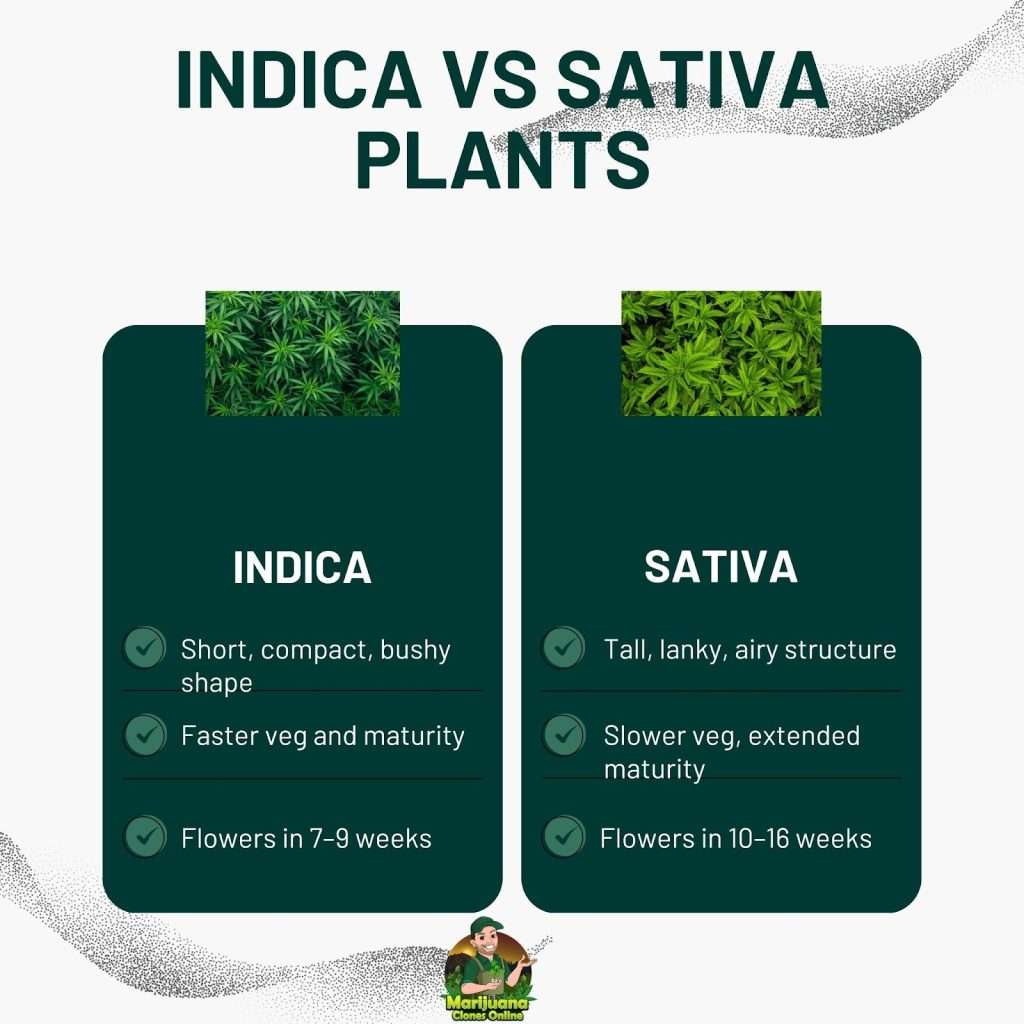
Indica plants tend to stay in a compact vegetative state and reach maturity faster. Their short, bushy stature allows them to be flipped into flower sooner without crowding your space. You can often veg Indicas for as little as 3–4 weeks and still get a solid yield.
Sativas need more time in veg to reach their full potential. Their lanky frame and extended internodes stretch rapidly, but they often take longer to reach structural maturity. Some growers prefer to veg them for six weeks or longer before flipping to flower, especially outdoors.
Flowering Time
Indicas are finishers. They typically flower in 7 to 9 weeks. That speed makes them ideal for growers running tight cycles or dealing with short outdoor seasons.
Sativas take their time. Many flower for 10 to 16 weeks, depending on the genetics. That longer timeline can push your harvest well into late fall, especially if you’re growing outdoors in a region that turns cold early.
Overall Lifecycle Duration
If you’re looking to squeeze in multiple harvests per year or turn around a fast indoor crop, Indicas give you the upper hand. Sativas require patience, but they often reward that time investment with unique terpene profiles and complex highs.
Yield Expectations: Which One Produces More?
Indica plants tend to be shorter, but they make up for it with dense, heavy buds. Their tight internodal spacing stacks flowers closely along the stem, resulting in thick colas and high weight per plant. The shorter flowering time also allows for more cycles per year, which adds up for both home growers and commercial operations.
These strains usually perform well in Sea of Green (SOG) setups, where high plant counts and quick flips are used to maximize canopy. Their uniformity and structure make them consistent yielders, even in small spaces.
Sativa plants often produce lower weight per square foot, but that doesn’t mean they’re lightweights. These strains build long, spear-shaped colas that can stretch a foot or more. The buds are airier and less dense, which means the final dry weight might not impress as much, but Sativas often make up for it with exotic aromas, high THC content, and resin production.
Sativas can shine in outdoor grows where vertical space and sunlight are abundant. With enough time and the right training, their long flowering period can produce large plants with generous yield potential.
Best Grow Environments for Each Plant Type
Every cannabis strain has a preferred environment where it truly thrives. Trying to force a Sativa into a tight indoor grow tent without proper training is like putting a racehorse in a broom closet. And stuffing a bushy Indica into a high-humidity greenhouse without airflow is asking for trouble.
Your plant’s genetics should match the space, tools, and climate you already have, or the ones you’re willing to build around.
Indicas in Controlled Spaces
Indicas were practically built for indoor growing. Their compact shape, fast turnaround time, and resistance to cold and stress make them favorites for closets, tents, and compact grow rooms.
They handle cooler night temps without fuss and rarely stretch out of control during the flip. For growers dealing with short ceilings, limited light coverage, or tight HVAC control, Indicas keep things manageable. And their dense buds make the most of every watt of light.
Still, those same dense flowers come with risks. High humidity, poor airflow, and stagnant air can lead to mold or bud rot if you’re not on top of things. Keep your humidity dialed below 50% in late flower and make sure fans keep air moving through that canopy.
Sativas in Spacious Setups
Sativas stretch. A lot. That vertical growth might overwhelm small tents, but it becomes a major asset in greenhouses or outdoor spaces. Long branches love sun, wind, and space to breathe.
These plants prefer steady warmth, intense light, and consistent airflow. They can be picky with fluctuations in humidity or temperature. Without proper light and training, their lower branches may lag behind in bud development.
Outdoors, Sativas thrive in regions with long summers and slow fall transitions. Places like Southern California or coastal climates let them finish flowering without frost interference. Indoors, make sure you’ve got ceiling clearance or be ready to train aggressively.
Nutrient and Water Needs: Do They Differ?
Nutrient and water management can make or break a grow. A plant that thrives under heavy feeding might burn if overfed in the wrong medium. Another might wilt with too much water in a pot that never dries out. Indica and Sativa strains have different rhythms, and as a grower, tuning into those patterns is how you unlock their full potential.
Feeding Patterns by Type
Indica strains tend to have stockier builds and shorter internodal spacing, which leads to more compact growth and heavier buds. This also means they’re more likely to handle a medium to heavy nutrient load, especially during late veg and early flower.
Sativas can be more sensitive. Their longer growth cycle, narrower leaves, and airy structure mean they don’t always need as much food. Overfeeding Sativas often leads to nutrient burn, clawing, or lockout. They respond best to lighter feed schedules and balanced micronutrient ratios, especially in hydro or coco setups.
Watering Behaviors
Indicas typically have tighter root zones that benefit from regular but controlled watering. Letting the medium dry back slightly encourages root expansion and reduces the risk of mold. Their dense foliage and shorter frame can trap humidity, so airflow is key.
Sativas, on the other hand, grow larger and develop deeper root systems. They need more water overall, especially in warm outdoor settings, but they also hate being waterlogged. Their structure allows better evaporation, but sloppy watering can still cause root rot in heavy soils.
Can You Cross Indica and Sativa Easily?
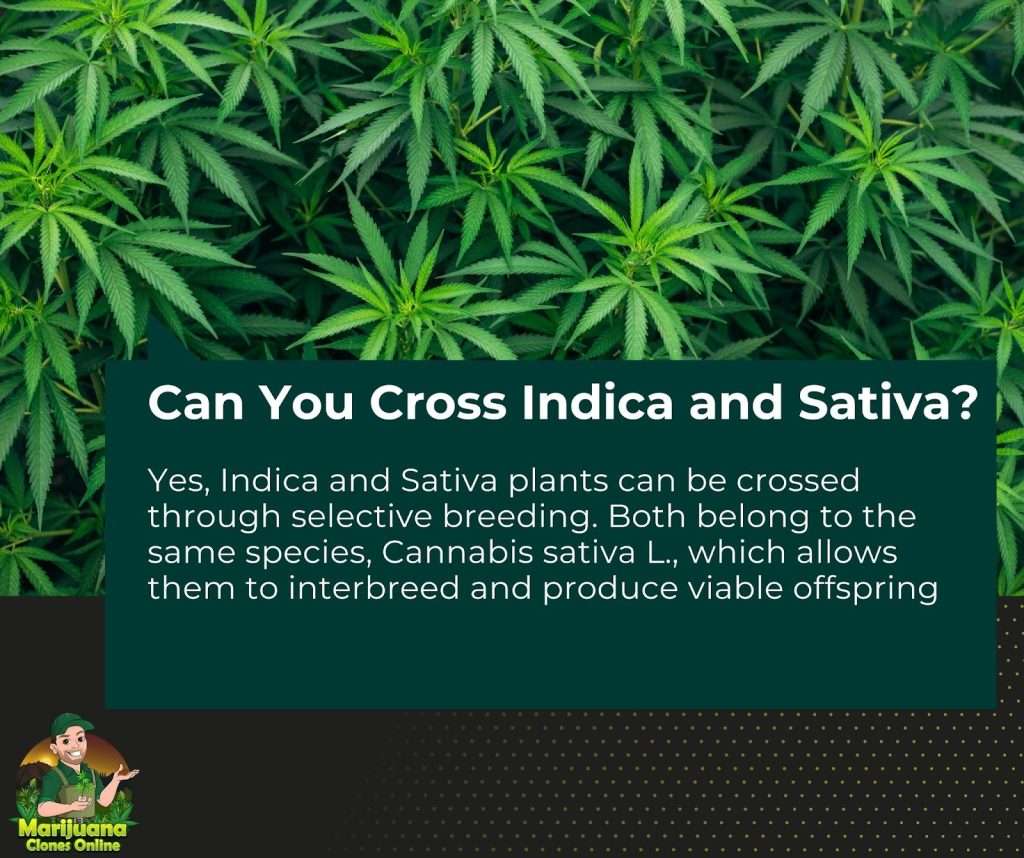
Crossing cannabis plants is not reserved for breeders in lab coats. It’s something growers at every level can explore with the right approach and genetics. Indica and Sativa strains cross naturally and readily, which is why nearly every strain on the market today is a hybrid.
But if you want to create something stable, something repeatable, you’ll need more than pollen and luck.
Hybridization Happens Naturally
Cannabis is sexually compatible across its types. An Indica male can pollinate a Sativa female, and vice versa. The seeds that result will express a mix of traits, with each plant showing a different balance depending on how dominant or recessive the parent genetics are.
This natural compatibility is what made hybridization explode over the past few decades. Most strains today, whether labeled Indica-leaning or Sativa-heavy, carry DNA from both sides of the spectrum.
What to Expect From a Cross
Crossing Indica and Sativa plants produces offspring with unpredictable traits unless you’re working from stabilized lines. You might get a short plant with long flowering times. Or a tall plant that finishes early but has fragile stems. That variability is part of the adventure, and the challenge.
The more generations you breed (F1, F2, etc.), the more control you gain over which traits stay consistent. Stabilizing a hybrid takes time and discipline, especially if you’re trying to lock in flavor, resistance, and yield.
Phenotype Expression and Hunting
Each seed from a cross can produce wildly different phenotypes. You might see some that lean hard Indica, others that stretch like a pure Sativa. This is where phenohunting comes in, growing and comparing each plant to find the expression that checks your boxes.
So, Grow What Fits Your Goals
Growers ask me all the time, Should I run Indicas or Sativas? My answer is always the same: grow what works for your space, your timeline, and your goals. Don’t chase hype. Don’t let a strain name or label make your decision for you. Choose genetics that fit your grow, not the other way around.
Indicas reward you with fast finishes, dense structure, and tight internodes. They thrive in smaller rooms and stay manageable from veg to flower. Sativas stretch taller, take longer, and need a little more finesse. But under the right hands and in the right environment, they deliver exotic highs, loud terpenes, and flower you won’t find in a dispensary.
The truth is, both types can produce fire if grown right. Both can disappoint if mismanaged. What matters most is consistency, and that starts at the genetic level.
Ready to Grow Smarter?

Start with verified genetics that produce consistent, high-quality results.
Marijuana Clones Online delivers exclusive phenohunted Indica, Hybrid and Sativa clones. These are the same elite cuts trusted by commercial cultivators.
They are:
✅ Pest-free
✅ Sulfur-treated
✅ Transplant-ready