

Cannabis trichomes are microscopic, crystal-like structures that cover the surface of the plant’s flowers and small leaves. These tiny outgrowths serve as the plant’s primary defense system and are also responsible for producing the very compounds that define the cannabis experience.
So, tiny as they are, trichomes carry the entire weight of your cannabis plant’s potency, flavor, and therapeutic potential. Growers obsess over their shape, color, and density.
Read on to understand why.
Types of Cannabis Trichomes
Cannabis plants produce several distinct types of trichomes, each with a specific structure and role. These resin glands vary in size, location, and chemical output, and not all of them contribute equally to cannabinoid and terpene production.
Let’s look at the three primary types of trichomes found on cannabis.
Bulbous Trichomes
Bulbous trichomes are the smallest and least visible type. These glands form a tiny dome directly on the surface of the plant and can appear across leaves, stems, and flowers. While they do contain trace amounts of cannabinoids, their contribution to potency is minimal. Bulbous trichomes function mostly as a protective layer against small threats like insects and environmental factors.
Capitate Sessile Trichomes
Capitate sessile trichomes are slightly larger and more glandular than bulbous types. These have a glandular head but lack a distinct stalk. They begin to appear in higher concentrations during the early flowering phase and are found mostly on the small sugar leaves that surround the flower. These trichomes contribute some cannabinoids and terpenes, but are not the dominant source of resin.
Capitate Stalked Trichomes
Capitate stalked trichomes are the largest, most potent, and most important type for cannabis growers. These glands feature a prominent stalk topped with a bulbous gland head filled with cannabinoids and terpenes.
Most of the plant’s THC, CBD, and aromatic oils are produced here. Capitate stalked trichomes form densely on the flower itself and are the primary target for those seeking high resin content, flavorful terpene profiles, or quality concentrate material.
How Trichomes Develop During Growth

Trichome production follows a natural timeline tied closely to the cannabis plant’s flowering cycle. These resin glands do not appear all at once. Instead, they emerge in stages, building toward peak resin and cannabinoid content as the plant nears full maturity.
Each phase of growth presents different opportunities for influencing trichome quality, quantity, and chemical composition. By observing the progression, growers gain valuable insights into the plant’s readiness and ultimate potential.
Trichome development typically begins early in the flowering stage, when small glandular structures first become visible on sugar leaves and flower sites. As the plant transitions into mid-flower, trichomes expand rapidly in both number and size. This is the point where cannabinoid synthesis intensifies and terpene production rises sharply. The plant diverts energy toward resin production as a form of self-protection and reproductive readiness.
In late flower, trichomes reach full maturity. Their gland heads swell with oils and shift in color, signaling harvest timing. Most growers focus their attention on this period, watching for the shift from clear to cloudy to amber trichomes. Each color stage reflects a different chemical state, offering a way to tailor harvest to the desired effect.
Clones grown from trichome-rich genetics often begin showing early resin development in the first weeks of flower. These plants carry the traits of their elite mother stock, producing uniform trichome coverage that continues to intensify right up to harvest. This consistency is crucial for both home growers and commercial cultivators aiming for premium flower or extract quality.
Factors That Influence Trichome Production
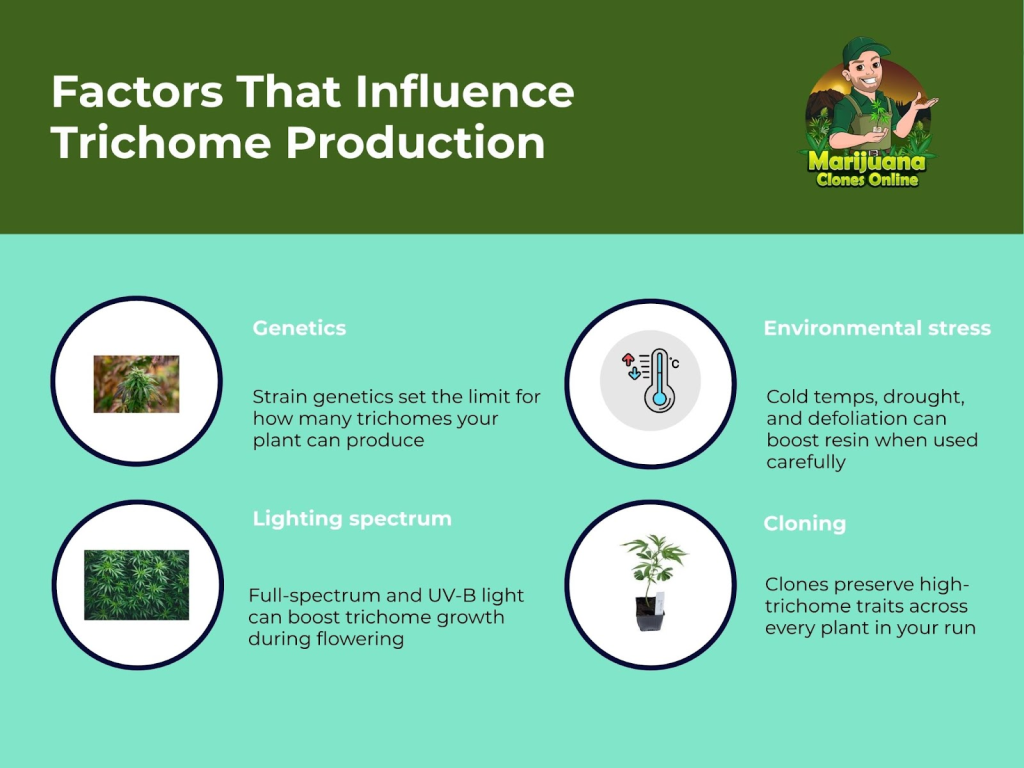
Several environmental and genetic variables shape how many trichomes a cannabis plant produces and how potent they become. These factors interact throughout the plant’s life cycle, but their impact becomes most noticeable during the flowering phase.
So, you should pay attention to the elements below to enhance resin output, terpene richness, and cannabinoid density.
Genetics Set the Baseline
Every plant has a ceiling for trichome production determined by its genetic profile. Some cultivars are naturally resinous and bred for heavy trichome expression, while others produce a thinner coating. Clones from phenohunted mother plants preserve trichome-heavy traits, giving growers a clear advantage.
Marijuana Clones Online offers cuts that have been selected specifically for their dense trichome coverage and extract-ready resin.
Light Spectrum and Intensity
Proper lighting fuels cannabinoid and terpene synthesis. Full-spectrum lighting supports broad resin development, while UV-B exposure during late flower may increase trichome output by triggering the plant’s natural defense response. Indoor growers who supplement with specific wavelengths often report more pronounced gland formation.
Nutrition and Feeding Practices
Nutrient balance plays a key role in resin development. Overfeeding can suppress trichome formation, while a well-calibrated organic feeding schedule can promote terpene complexity and oil production. Late-stage flushing with clean water is sometimes used to help sharpen terpene profiles and reduce nutrient residue in the final resin.
Temperature and Humidity Control
Cooler temperatures near the end of flowering have been linked to higher resin preservation and enhanced terpene retention. A sudden drop in humidity late in the cycle may stimulate increased trichome formation as the plant responds to environmental stress. Excess heat, on the other hand, can cause resin glands to degrade or dry out before harvest.
Plant Stress and Stimuli
Mild stress techniques, such as leaf stripping, defoliation, or controlled drought, may trigger defensive trichome production. When used correctly, these methods can enhance resin without compromising plant health. However, excessive or poorly timed stress can have the opposite effect, stunting trichome development and reducing cannabinoid content.
Cloning and Tissue Culture Consistency
Growers who work from seed often see variable trichome development across a crop. Clones eliminate that guesswork. Tissue culture propagation offers even tighter control, producing uniform trichome-rich plants that respond predictably to environmental inputs. For those targeting extraction-grade resin or premium flower markets, starting with genetically consistent material is essential.
What Damages Trichomes & How to Avoid It
Trichomes are incredibly delicate. While they carry the plant’s most valuable compounds, they are also vulnerable to damage at nearly every stage of cultivation, harvest and storage.
Here are the most common causes of trichome loss and how to prevent them:
- Rough Trimming or Handling. Direct contact with fingers or tools can crush or knock off trichome heads. Use soft gloves, trim gently and avoid excessive contact with finished buds.
- Machine Trimming. Automated trimmers save time but can shear off trichomes during rotation and vibration. Hand trimming remains the best option for preserving delicate resin glands.
- High Heat During Drying. Temperatures above optimal ranges can cause trichome oils to evaporate or degrade. Maintain drying rooms between 60 and 70 degrees Fahrenheit to protect cannabinoids and terpenes.
- Improper Humidity Control. Humidity that is too high can cause mold growth inside resin, while dry conditions can make trichomes brittle and prone to breakage. Aim for a stable range around 55 to 62 percent.
- Direct Light Exposure Post-Harvest. Ultraviolet light degrades THC and other cannabinoids. Store trimmed flower in opaque containers away from sunlight to preserve trichome potency and freshness.
- Overly Long Cure Periods in Poor Conditions. Extended curing in unregulated environments can lead to terpene loss and trichome degradation. Use glass jars with humidity control packs and burp them regularly.
- Poor Shipping or Packaging. Loose packaging, vacuum sealing or temperature fluctuations during transport can crush or melt trichomes.
Uses of Cannabis Trichomes
Trichomes are the source of cannabis’s most valuable compounds. These resin-filled glands power the plant’s psychoactive effects, medical benefits, and aromatic appeal. Beyond their role in flower quality, trichomes also serve as the foundation for a wide range of cannabis-derived products.
You can use them in the following ways:
Making Solventless Concentrates
Trichomes can be physically separated from the plant without chemicals using methods like dry sifting or ice water extraction. These techniques yield products such as kief and bubble hash, which are prized for their purity and flavor when made from high-quality material. Heat and pressure applied to this resin can produce rosin, a clean and potent extract.
Creating Solvent-Based Extracts
More advanced processes use solvents like butane, propane or ethanol to dissolve trichomes into concentrates such as shatter, wax and oils. These methods extract a high percentage of cannabinoids and terpenes, resulting in potent products suitable for dabbing, vaping or infusion. Trichome quality and cleanliness directly influence the safety and flavor of these extracts.
Live Resin and Flash-Freezing
Live resin is made by flash-freezing freshly harvested cannabis before extraction. This preserves the full terpene and cannabinoid profile inside the trichomes, leading to a richer and more aromatic concentrate. Only plants with dense, well-preserved trichomes qualify for this high-end extraction method.
Infusions and Edibles
Trichomes are used to infuse oils, butter and tinctures that form the base of many edible products. The resin is first decarboxylated to activate cannabinoids before being blended into food-grade ingredients. Potency, onset and flavor all depend on the quality of trichome material used.
Medical and Therapeutic Applications
Specific trichome-rich strains are cultivated for their medicinal properties. The cannabinoid and terpene content extracted from trichomes can be tailored for targeted relief, including chronic pain, inflammation, anxiety or insomnia. Late-harvest trichomes high in CBN, for example, are valued for their sedative effects.
Using Trichomes to Time Harvesting
Trichomes are one of the most accurate visual indicators of a cannabis plant’s maturity. Their color and texture shift as the plant progresses through late flowering, giving growers a clear way to determine the ideal moment to harvest.
Timing the harvest based on trichome development has a direct impact on the effects, potency and overall quality of the final product. Waiting too long or harvesting too early can reduce THC levels, alter terpene profiles or lead to an undesirable experience.
Color Stages of Trichomes
- Clear Trichomes indicate that cannabinoid production is still underway and the plant is not yet ready for harvest.
- Cloudy or Milky Trichomes. This phase represents peak THC concentration and balanced effects. Most growers target this window for harvesting when looking for potency and clarity.
- Amber Trichomes. As trichomes continue aging, they shift to a golden or amber hue. This signals cannabinoid breakdown and the beginning of THC conversion to CBN. Harvesting at this stage results in more sedative, body-heavy effects.
Best Practices for Monitoring
- Use a jeweler’s loupe, digital microscope or macro lens to inspect trichomes closely.
- Focus on trichomes located on the buds, not on the sugar leaves, for the most accurate indicators.
- Sample trichomes from several parts of the plant to get a full picture of maturity.
- Harvest in stages if different colas mature at different rates.
Clones Outperform Seeds
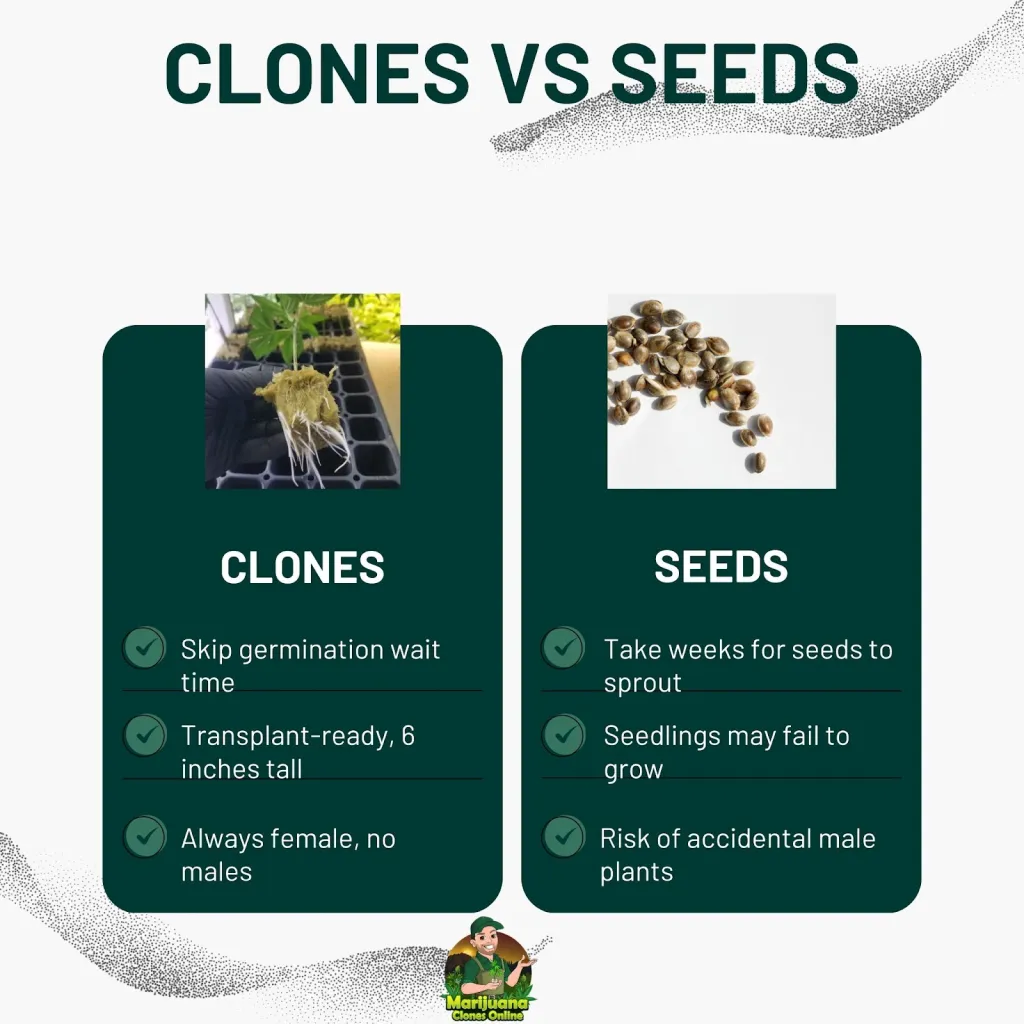
Trichome production begins with genetics. While seeds introduce variability and unpredictable phenotypes, clones offer a reliable path to trichome-rich plants. Each clone is a genetic replica of a proven mother, carrying forward all of the traits that define resin output, terpene complexity and cannabinoid strength.
This consistency allows growers to make confident decisions about harvest timing, nutrient strategies and environmental conditions without second guessing the plant’s potential.
Seeds often require time-consuming pheno hunts to isolate a single high-performing plant. Even then, those traits are not guaranteed to show up again in future runs. Clones eliminate this risk by preserving the exact genetic blueprint. This matters most for growers who want sticky, potent flowers that meet market demands or personal standards.
Want to Grow Cannabis with Premium Trichome Output?
Explore our exclusive clones hand-selected for elite resin production. If you want to skip the growing process altogether, you should definitely try our lineup of the best THCa flower online here!