

Are you confident you’d recognize bud rot before it spreads, or are you only finding it when it’s too late?
Bud rot, also known as botrytis, is one of the most devastating and deceptive threats cannabis growers face. It doesn’t start on the surface. It begins inside the densest parts of your buds, hiding out of sight until the damage is done. That single fuzzy patch might be the warning sign you miss before it spreads across your entire canopy.
Growers often confuse the early symptoms with nutrient issues, light burn, or even frost. Others don’t realize anything’s wrong until their colas turn brown, collapse to the touch, or release a sweet, fermented smell instead of the sticky, piney aroma they expected.
Every harvest depends on your ability to detect it early, act fast, and make sure your grow environment doesn’t turn into a breeding ground for mold.
Let’s break down how to identify bud rot at every stage, learn what causes it, and give you the tools to stop it before it spreads.

What Is Bud Rot?
Bud rot is a fast-acting fungal disease that targets the heart of your cannabis flowers, starting from the inside and working its way out. The fungus responsible, Botrytis cinerea, thrives in moist, stagnant conditions and can silently destroy entire colas before a grower even notices a problem. It typically takes hold deep within the densest parts of the buds where airflow is limited and moisture accumulates.
This pathogen doesn’t simply attack from the outside. It penetrates the bud structure and rots it from within, making early detection one of the most important skills a grower can develop. Left unchecked, botrytis can wipe out a significant portion of a crop in a matter of days. For this reason, growers must be vigilant, especially during flowering when conditions become more favorable for mold growth.
Causes of Bud Rot
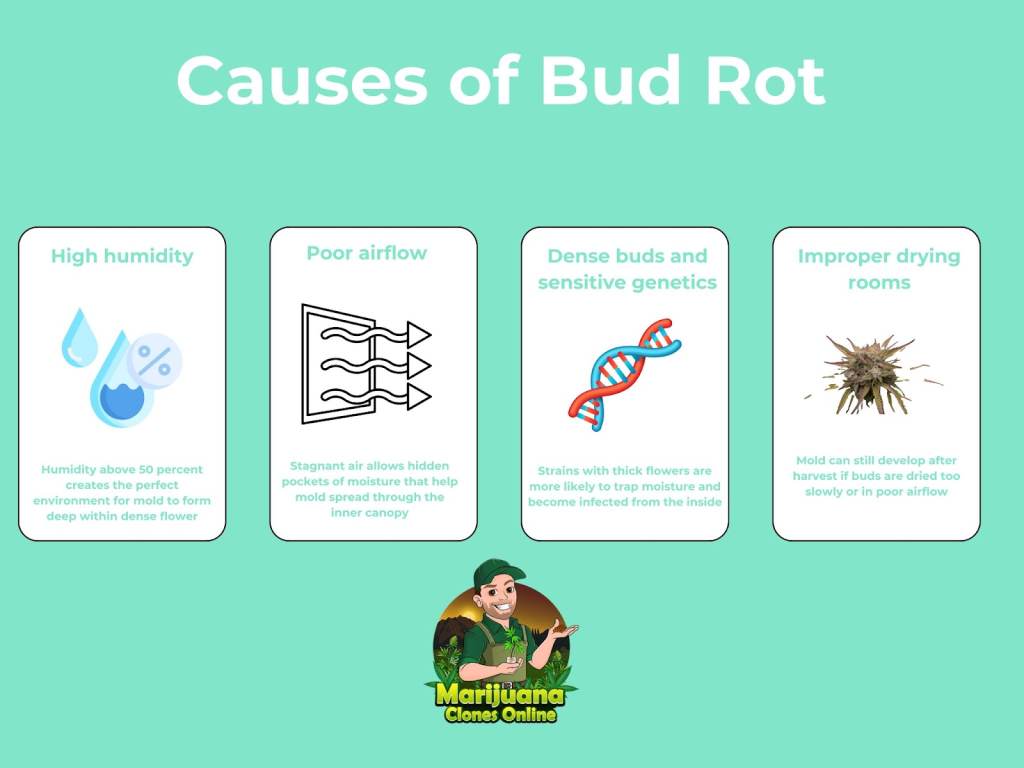
Bud rot doesn’t appear by chance. It develops through a combination of environmental triggers, plant structure, and grower practices that make cannabis flowers vulnerable to mold. Each of the following factors plays a role in giving Botrytis cinerea the opportunity to infect and thrive within your plants.
High Humidity and Moisture Buildup
Excess humidity during flowering is one of the leading causes of bud rot. Levels consistently above 50 percent can trap moisture deep within dense buds, especially in areas of low air circulation. Watering late in the day, poor runoff, and wet leaves can all contribute to a microclimate where botrytis thrives.
Growers in coastal regions or rainy climates are especially at risk. Even indoor grows can be affected if ventilation and dehumidification are not carefully managed. Monitoring humidity around the clock is essential, not only in the grow room but also in drying spaces after harvest.
Lack of Airflow Inside the Canopy
Stagnant air allows humidity to linger and creates ideal conditions for fungal spores to activate. A still grow room may feel peaceful, but inside the dense canopy, pockets of moisture become breeding grounds for disease.
Improper pruning, overcrowded plants, and setups without oscillating fans contribute to poor air movement. Training techniques like low-stress training and strategic defoliation can help keep air moving through the bud sites, drying out areas that would otherwise remain damp.
Some growers add small USB-powered fans deep inside their canopy to keep airflow steady in hard-to-reach zones. This method can reduce the chances of internal mold dramatically, especially during late flower.
Dense Bud Structure and Vulnerable Genetics
Certain strains produce exceptionally large, tightly packed colas. While they may look impressive, this structural trait traps moisture and increases the likelihood of bud rot. The inner portions of these buds receive little air exposure and are often the first places mold begins.
Growers who use clones from Marijuana Clones Online often select lower-yielding strains with more open bud structures when growing in high-humidity environments. These phenotypes are not only easier to manage but also naturally resist internal mold by allowing better airflow.
Genetics play a significant role. Even small differences in bud shape and trichome density can influence how susceptible a plant is to botrytis. Cultivators focused on long-term success tend to source clones that have been bred and tested for mold resistance.
Insect Damage and Wounds on Buds
Caterpillars, aphids, and other pests that chew on cannabis flowers often create small wounds that become entry points for mold. These damaged areas are difficult to spot and are especially vulnerable during the later stages of flowering when bud structure tightens.
Once the surface is broken, botrytis spores can penetrate and establish themselves quickly. This is why integrated pest management (IPM) is a critical component in preventing bud rot, not only for plant health but for structural protection.
Environmental Inconsistencies During Flowering
Fluctuations in temperature and humidity can lead to condensation forming within the buds. Even short periods of high humidity followed by a cooldown can result in trapped moisture inside flower clusters.
Some growers report humidity spikes immediately after watering or during lights-off cycles, when airflow and temperature drop. Without intervention, these changes provide a perfect setup for spores to germinate and spread.
Monitoring these patterns and adjusting equipment accordingly helps reduce risks. Dehumidifiers, temperature controllers, and proper fan placement all contribute to a more stable grow environment.
Post-Harvest Conditions and Drying Rooms
Bud rot doesn’t always stop after harvest. If harvested buds are dense and drying rooms are not properly ventilated, the same moisture-related issues can cause mold to develop during the cure.
Oscillating fans and slow, steady drying in a cool, low-humidity room are essential. A dry room with poor circulation can be just as risky as a grow tent during flower. Growers should inspect drying buds regularly and remove any that show signs of soft spots or internal discoloration.
Spores can continue spreading after the chop, which is why cleanliness and airflow remain critical during the drying process. This is especially true for larger colas that dry slower and hold more moisture inside.
How Fast Does Bud Rot Spread?
Bud rot is one of the fastest-moving threats in cannabis cultivation. Once the conditions align (high humidity, low airflow, dense flower sites), Botrytis cinerea can infect and destroy a bud in as little as 24 to 48 hours. The speed of spread depends on how long the environment remains favorable to the fungus and how quickly the grower responds to the first signs.
What makes bud rot so destructive is its stealth. The infection usually begins in the center of a cola, where light and air cannot reach. From there, the fungus consumes the internal plant tissue, collapsing the bud from the inside out.
You may not notice anything wrong until the outer sugar leaves turn brown or the flower starts to crumble at the touch. By then, it’s likely the infection has already reached other parts of the plant, or even neighboring plants.
Spores released by the mold can travel through the air or ride on water droplets. This means that one infected cola can quickly compromise other buds in the same room or greenhouse, especially in environments with poor air exchange. Tools, gloves, or even hands can carry the spores from one plant to another if sanitation is not maintained between inspections or pruning.
During the final weeks of flower, plants are particularly vulnerable. Buds are at their heaviest, and humidity tends to spike during this stage due to increased water usage and denser canopies. A few hours of missed ventilation or an unexpected storm in an outdoor setting can be all it takes for bud rot to gain a foothold and accelerate.
Signs of Bud Rot in Cannabis
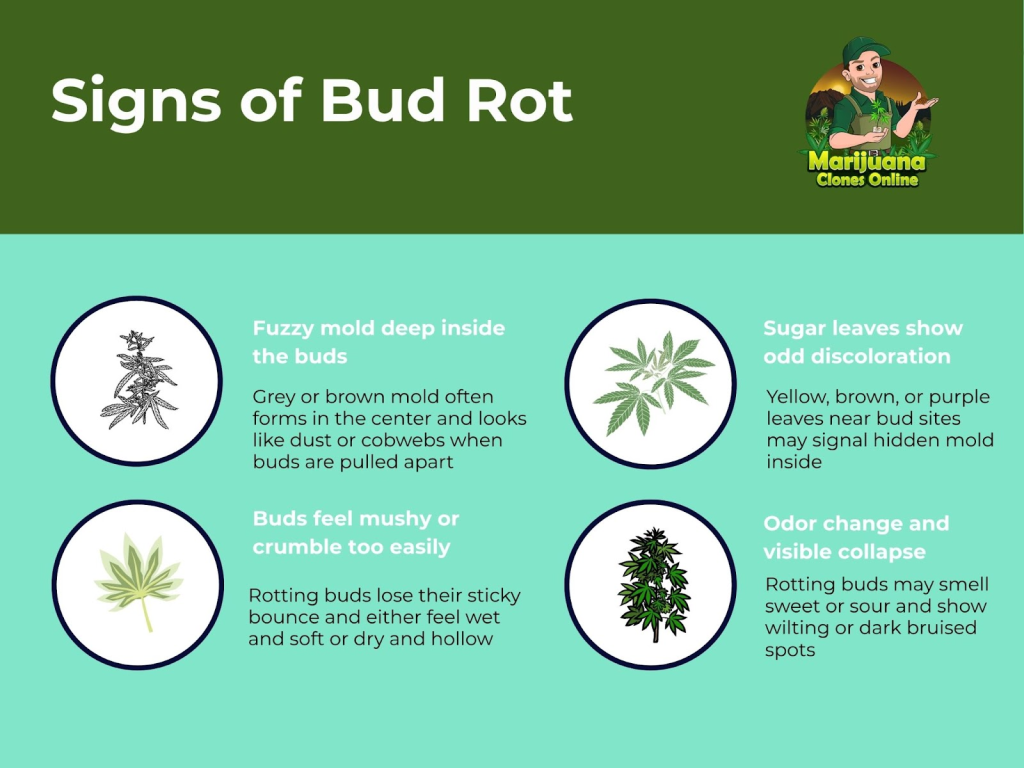
Catching bud rot early starts with knowing exactly what to look for, both inside and outside your buds. Since this type of mold begins its destruction from within, it often stays hidden until significant damage has already occurred. The key is learning how to read the subtle cues before the rot spreads across your canopy.
Grey or Brown Fuzzy Mold Inside Buds
The most telling sign is a fuzzy mass hidden deep in the center of the bud. It often appears grey, brown, or off-white and resembles a cobweb or dust coating. You must gently separate large colas to inspect the interior closely, especially during mid to late flower. If the core of a bud looks dark, stringy, or webbed, it’s likely infected.
Mushy or Crumbly Texture in Buds
Healthy cannabis buds are sticky and springy. Buds affected by rot will either feel unnaturally wet and soft or, in later stages, dry and brittle. If a bud collapses under light pressure or feels hollow, mold has likely consumed the interior. That texture change is often the first clue for experienced growers during daily inspections.
Discoloration of Sugar Leaves
Leaves around infected buds begin to turn yellow, brown, or purple in unnatural patterns. These sugar leaves may curl inward or appear scorched. The discoloration often appears before mold is visible and serves as an early warning, especially when it’s localized to one area of the plant.
Sweet or Fermented Odor
Unlike the pungent, earthy aroma of healthy cannabis, infected buds may release an odd, sweet, or fermenting smell. This shift in scent is often subtle but should never be ignored. Any aroma that deviates from your plant’s usual terpene profile deserves a closer look.
Dark Spots or Wilting at Bud Sites
In some cases, small dark patches develop where mold is taking hold. These spots may look like bruises and can be easy to miss unless inspected up close. Wilting or drooping bud tips, especially when the rest of the plant looks healthy, can also be a red flag.
Leaf and Calyx Collapse
Infected buds often show structural collapse. Calyxes may shrivel, and surrounding leaves can suddenly fold inward or die off. This breakdown happens as the mold consumes the inner plant tissue, leaving no support for the flower’s shape.
How to Confirm If It’s Bud Rot (And Not Something Else)
Bud rot shares visual similarities with other plant issues, which often leads growers to misdiagnose it, especially in the early stages. Here are the most reliable ways to tell if it’s truly bud rot:
- Open the Bud and Inspect the Core. Bud rot usually starts from the inside out. Gently pull apart the suspected bud and look into the center. A healthy core will be green and sticky. If the center is brown, grey, or filled with web-like mold, it’s almost certainly rot.
- Check for Texture Changes. Mold-infected buds feel soft, soggy, or even hollow. On the flip side, some become overly dry and crumble apart. These are not characteristics of nutrient stress or overexposure to light.
- Look for Fuzzy Mold vs. Leaf Damage. Light burn, frost, or nutrient issues usually affect the leaves uniformly. Bud rot causes fuzzy, stringy mold deep in the flower, not just leaf discoloration. The mold often has a matte, dusty look rather than a clean yellowing or crisping.
- Assess the Smell. Bud rot gives off a sweet, rotten, or fermenting odor. This is different from the typical earthy, piney, or citrus scent of healthy cannabis. If you notice a change in smell in one area of the canopy, investigate further.
- Test Structural Integrity. Press gently on the bud. A healthy bud will resist and bounce back. A moldy one will collapse or feel hollow. This physical test often reveals internal infection before mold appears on the surface.
- Check Sugar Leaf Patterning. Bud rot usually causes nearby sugar leaves to twist, brown, or wilt in a scattered pattern. By contrast, nutrient issues tend to affect larger fan leaves and follow predictable deficiencies.
- Use a Magnifying Glass or Scope. Under magnification, mold appears as clusters of fuzzy threads or spore colonies. If you’re unsure, this tool helps differentiate between natural trichomes and invasive mold growth.
- Inspect for Mold Inside Bud Stems. Some infections move into the stem area within the cola. Gently slice open a stem near an affected bud. If the interior shows brown streaks or looks soft and decayed, mold has spread deeper into the plant.
How to Prevent Bud Rot Before It Starts
Bud rot can devastate a grow in days, but the right prevention strategies can stop it before it ever begins. Prevention is a full-system approach that includes environment control, plant structure, handling practices, and genetic choices.
Below are the core prevention strategies every grower should build into their process to keep botrytis from taking hold.
Manage Humidity and Temperature Every Day
- Keep humidity below 50 percent during flowering.
- Use digital hygrometers to monitor multiple canopy zones.
- Run dehumidifiers during lights-off cycles to avoid moisture buildup.
- Set exhaust fans on timers or climate controllers to maintain constant airflow.
- Avoid watering close to lights-out periods, when evaporation slows down.
Even a short spike in humidity can lead to trapped moisture in colas. Some growers see a humidity rise after watering and adjust their schedule accordingly.
Optimize Airflow Throughout the Canopy
- Install oscillating fans both above and below the canopy.
- Place small clip-on or USB fans within plant rows to move air through dense growth.
- Keep plants spaced apart to avoid overlapping leaves and shaded zones.
- Rotate potted plants daily during flower to ensure all sides receive airflow.
Good airflow not only dries moisture quickly but also reduces the chance of condensation forming inside buds.
Control Plant Structure With Pruning and Training
- Remove lower foliage and crowded leaves that block light and airflow.
- Use low-stress training (LST) or SCROG methods to open up the canopy.
- Top plants early in veg to encourage more even branching.
- Defoliate selectively during early flower to prevent moisture pockets.
Plants with tight, crowded growth trap humidity where you can’t see it. Training and pruning create an environment that helps the plant breathe.
Avoid Dense, Overgrown Bud Sites
- Choose strains with looser bud structure in humid climates.
- Limit excessive nitrogen in late flower, which creates leafy, moisture-retaining colas.
- Harvest on time. Delaying too long increases the chance of mold in ripened buds.
Protect Plants From Physical Damage and Pests
- Prevent caterpillar and insect infestations that leave wounds in buds.
- Handle plants carefully during training and harvesting to avoid damaging trichomes.
- Remove any buds that show signs of stress, mold, or decay immediately.
Even small wounds can become entry points for mold. Keeping pests out and limiting physical damage gives botrytis fewer ways to start.
Set Up a Clean, Controlled Drying Environment
- Hang buds in a dark, cool space with good air circulation.
- Keep humidity in the dry room between 45 and 55 percent.
- Use fans to circulate air, but never blow directly on buds.
- Avoid overcrowding drying lines, space out buds so they don’t touch.
Bud rot can strike even after harvest. Drying environments must be treated as an extension of your grow room, with the same level of care and control.
Use Mold-Resistant Genetics and Trusted Clones
- Start with sterile, sulfur-treated clones that are PM-free.
- Choose strains bred for airflow-friendly bud structure and stress tolerance.
- Source clones from trusted facilities with rigorous sanitation practices.
A Quick Checklist for Bud Rot Identification
Bud rot often goes unnoticed until it’s too late. Having a simple checklist you can run through during each inspection gives you a clear edge against one of cannabis cultivation’s most aggressive threats. Use the following list as part of your daily or weekly routine during flowering and drying.
- Inspect the core of large buds. Gently pull apart colas and check for fuzzy mold, discoloration, or dark centers.
- Feel for mushy or crumbly textures. Press gently on buds. Healthy ones feel dense and sticky, not hollow or dry.
- Check for sugar leaf discoloration. Look for yellowing, browning, or curling leaves around bud sites.
- Smell for unusual odors. A sweet, fermented, or musty smell may signal internal mold.
- Look for fuzzy growth inside buds. Bud rot appears as gray, white, or brown web-like mold hidden deep within the flower.
- Use a scope or magnifier when in doubt. Mold spores often appear as fine, fuzzy threads under magnification.
- Remove any suspicious buds immediately. Isolate infected plant material to prevent spreading through spores.
- Monitor humidity and airflow constantly. Keep RH under control and ensure airflow reaches all areas of the canopy.
- Inspect drying buds as closely as flowering ones. Mold can appear post-harvest in drying rooms with poor airflow or high moisture.
- Check nearby buds even after spotting one infected cola. Bud rot spreads through contact and airborne spores. Assume others may be at risk.
Want to Start Your Next Grow with Mold-Resistant, Sterilized Clones?
Check out Marijuana Clones Online’s exclusive phenohunted genetics, tested for mold resistance, and grown in sterile conditions.